
Above the Clouds, Beyond the Passes
A place where the road climbs until the clouds are level with your window, a lake that turns four shades of blue before breakfast, and air that is so thin and clean that silence almost becomes something you can hold in your hands.
Welcome to Ladakh! For five days, forty-one students from Chennai and Coimbatore walked through this stark landscape. They came with full backpacks and curiosity, and with the kind of restlessness only teenagers carry. They crossed mountain passes that touch the sky, slept beside a lake at minus three degrees, watched two rivers merge into one, and paid their respects at monasteries that have stood watch over these valleys for centuries. They arrived as a school group. They left as something closer to witnesses.
This is the story of their journey through a place most of them had only seen in photographs: Ladakh, the high-altitude cold desert at the top of India, where the land is older than memory and the light behaves like nothing else on earth. Flying through the night and landing in Delhi at two in the morning, that hollow hour when airports feel like a held breath. By dawn they were in the air again, bound for Leh. Somewhere over the Himalayas, the windows turned silver. Peaks stood in endless rows, white-shouldered and patient, like an old council that had been waiting for them. Conversations faded. Someone pressed a forehead to the glass and did not look away until the wheels touched down. Somewhere, awareness of themselves as observers, sketchers, and questioners was built.
Leh does not welcome visitors with noise. It welcomes them with stillness. The sky was blue so deep it felt like looking up into water. The first day belonged to rest, as it should in a place this high. The group let their bodies learn the land before their feet did. There was slow tea, slow walks, and quiet talk about how everything here seems to have been designed by patience: low buildings leaning into the wind, every tree a small act of devotion, every drop of water treated as a gift. By evening, the students were already seeing the landscape differently. The mountains were no longer scenery. They were educators.
Stories Written in Stone and Water
The next day started early. Students picking apples, taking snaps, shooting group videos, calling parents. The entourage began by visiting the Hall of Fame. True to its name, the site is a reminder of the constant hustle and tussle the armed forces go through to keep the nation safe. This is where landscape turns into memory, how a road, a border and a soldier’s sacrifice are stitched into the same hillside. At the Gurudwara Pathar Sahib, the holy site where perseverance and goodness thrived over evil and darkness and Magnetic Hill, where gravity works wonder faith and mystery shared the same road. At the Sangam, two rivers met, the Indus and the Zanskar, one blue and one muddy green, braiding slowly into a single current. It was the gentlest meeting of waters. At the Shanti Stupa, the whole of Leh lay below in white and gold, cradled by mountains in the last light of the day before heading back to their abode after a fruitful day.
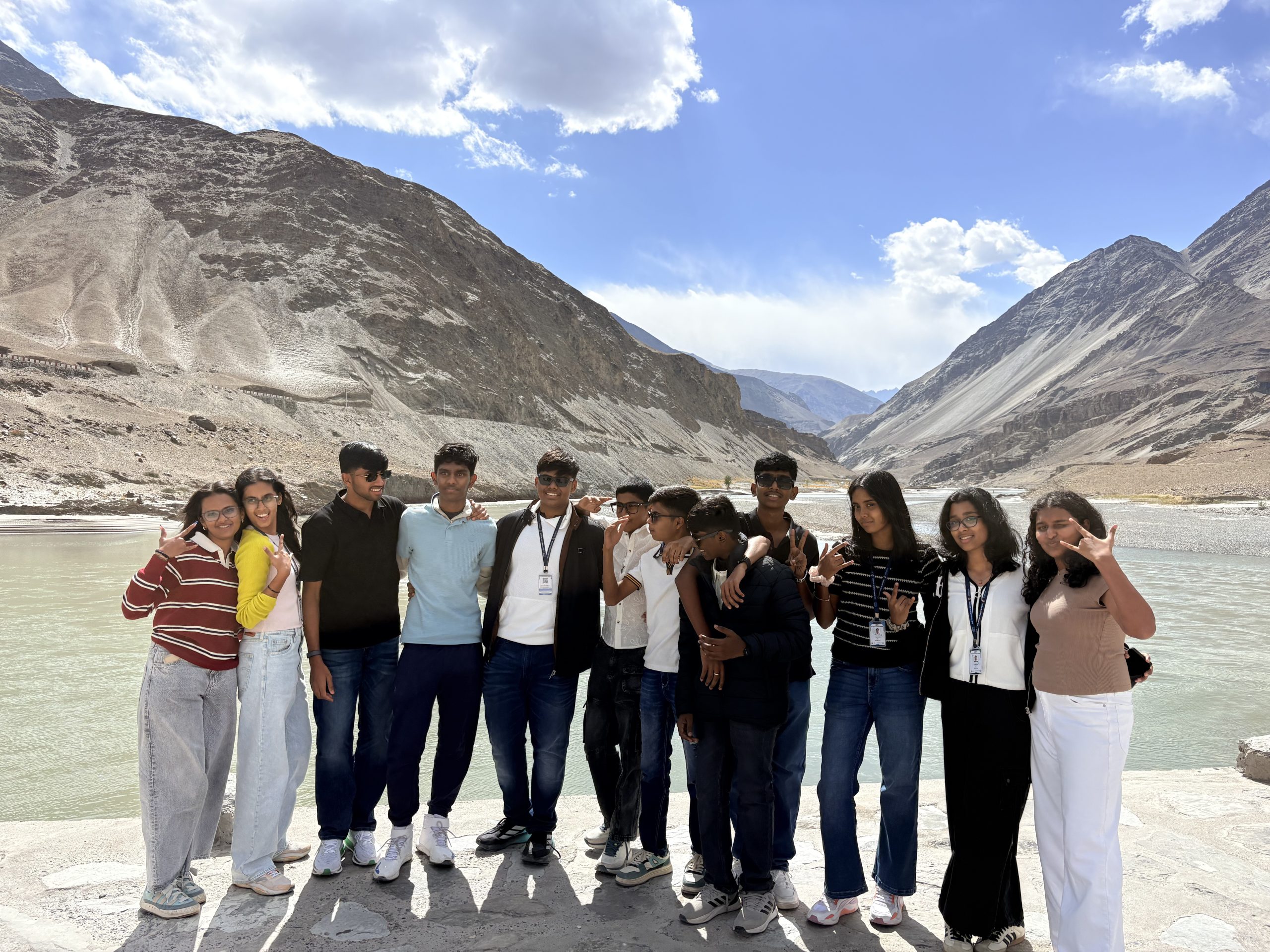 At the Sangam
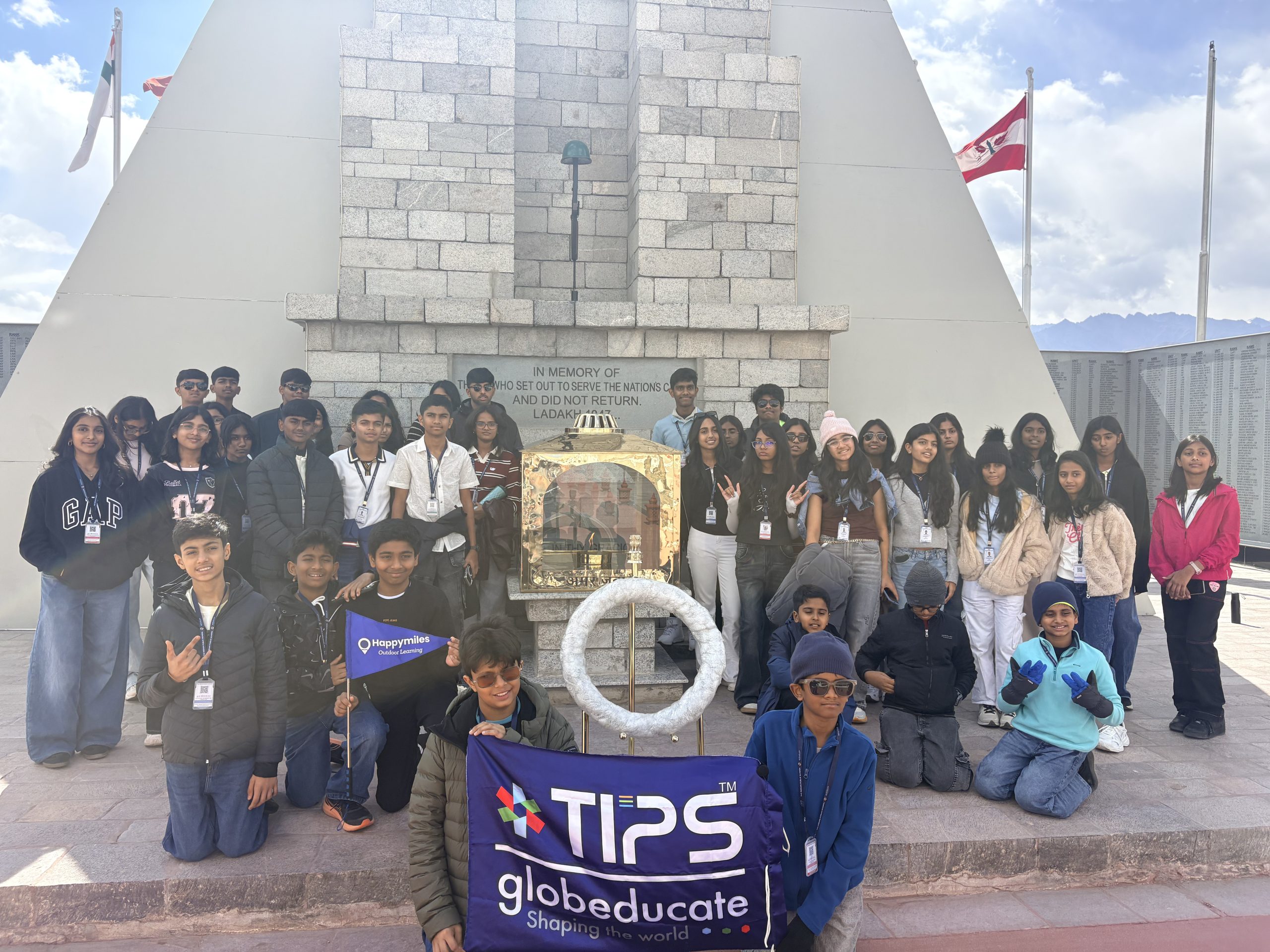 At the Hall of Fame, honouring the soldiers
The Road That Climbs Into the Clouds
On the morning of the 25th, in the cold dawn we set out for Nubra along the Khardung La, one of the highest motorable passes in the world. The road climbed until the world went white at its edges. Prayer flags snapped in the wind like a thousand small conversations with the sky, and every window was crowded with faces trying to hold the moment still.
“Is this actually the top of the world?”
“Close enough. Now stop talking, I’m filming.”
Then came the descent into Nubra, a valley that felt like a secret kept for centuries. Diskit Monastery glowed on its hill, courtyards stacked upon courtyards, and above it the great Maitreya Buddha gazed across the valley with an expression that asked for nothing and forgave everything. By afternoon, the Hunder dunes rose out of the cold desert against snow-lined mountains, an impossible pairing. The students ran, laughed, fell into the sand, and filled their notebook of memories with sketches of walls, and fields. That night the camp was set warm, dinnertime was loud with stories, and the stars were so many they felt almost generous.
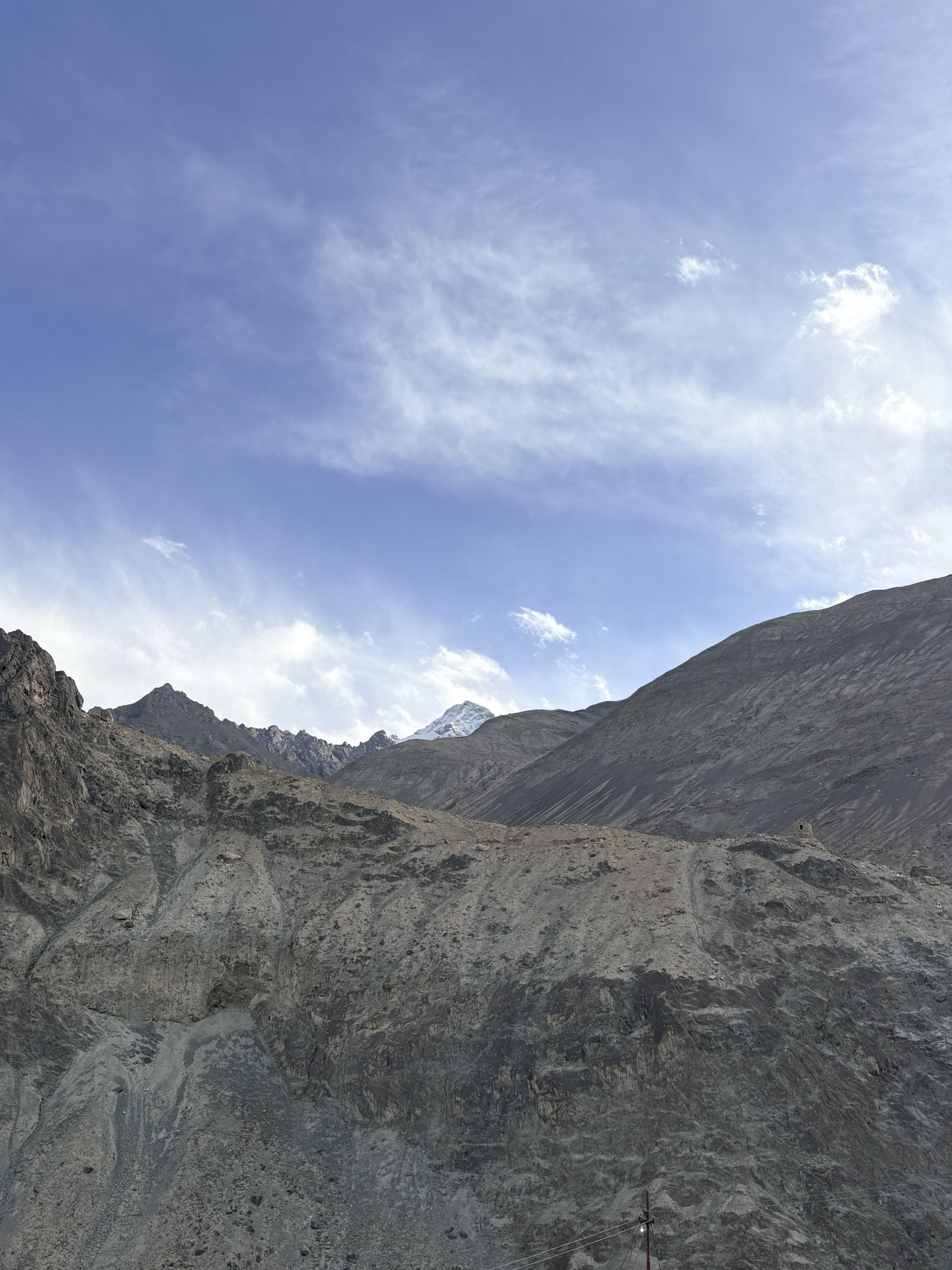 KhardungLa
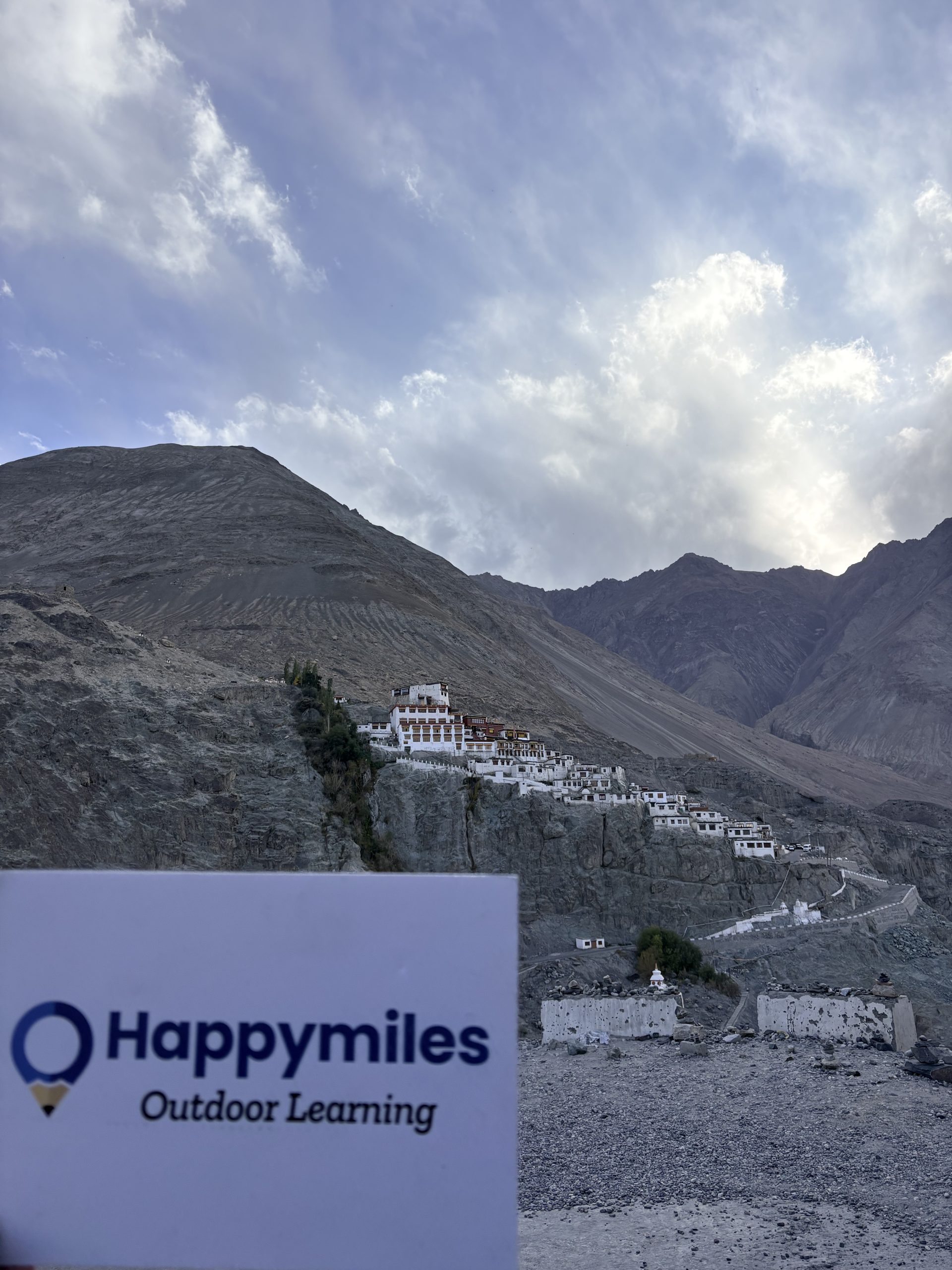 Diskit Monastery
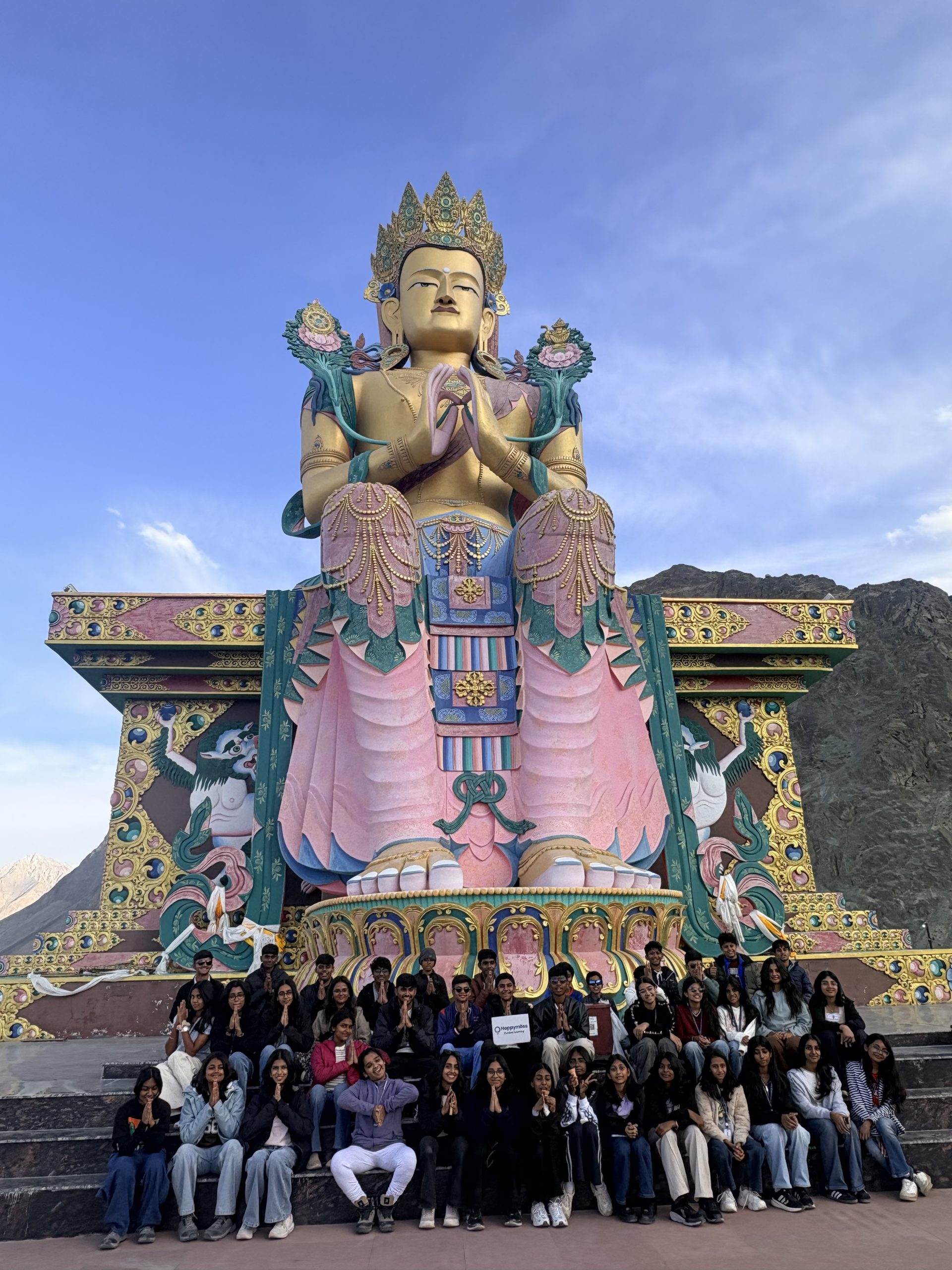 Maitreya Buddha
Minus Three and Wonderfully Alive
And then, Pangong.
“Okay, this view is unfair. How am I supposed to go back to the classroom after this?”
The Shyok road was not so much a road as a long, winding preface. The terrain changed by the hour. The rock turned to dust and turned to the sky. Then, after hours of brown and grey, the earth simply opened, and there it was.
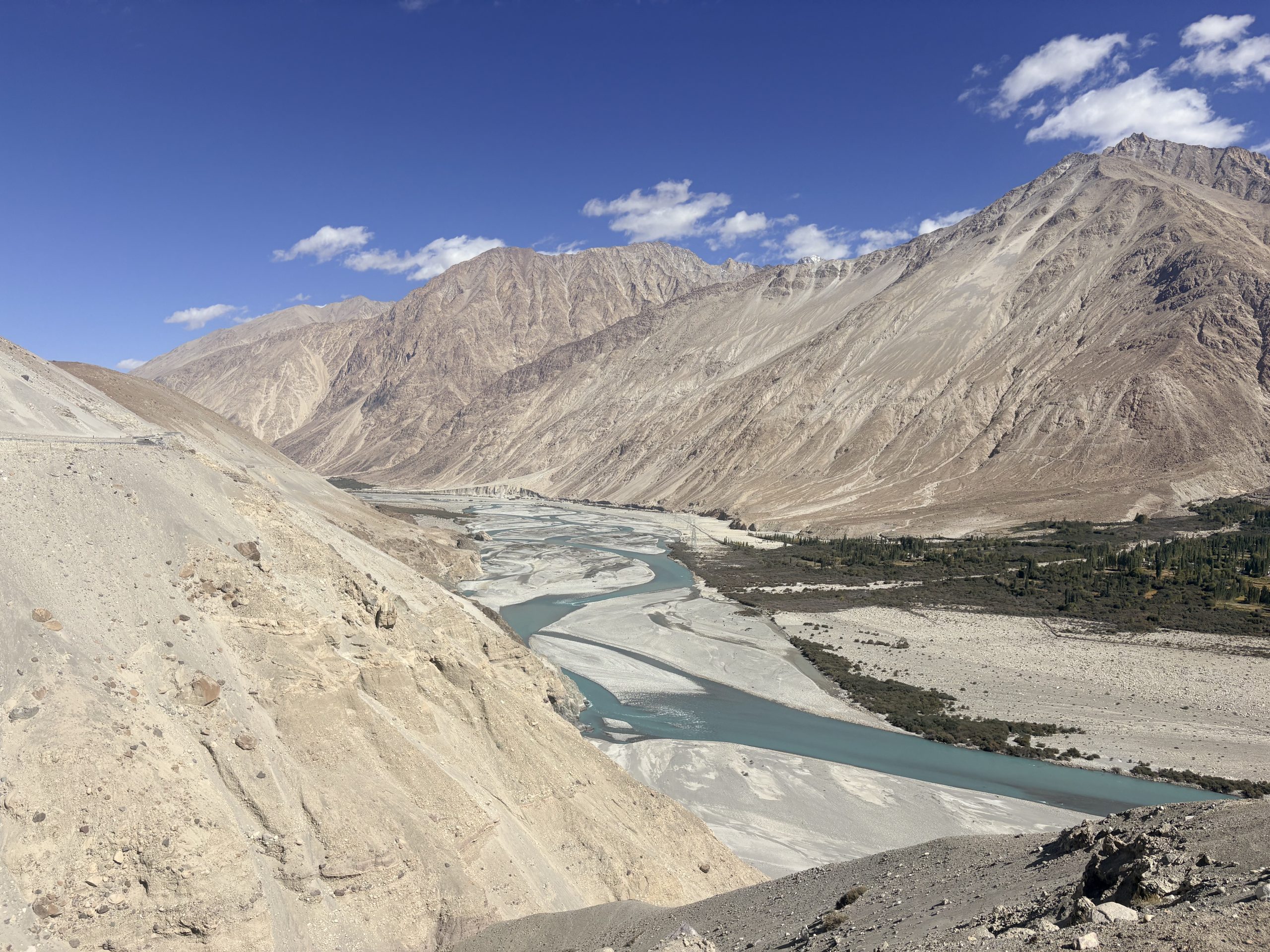 Shyok River Valley
Blue. A blue that seemed unreal, shifting between turquoise, sapphire and silver as clouds drifted across it. The students fell silent, and then burst into wonder.
That evening the temperature dipped to around minus three. Cheeks glowed pink, breath rose in little clouds, and everyone huddled into their jackets to watch the sun go down as the light slid from gold to rose to violet across the water. One student had been quietly collecting questions all evening.
“What are the five colours in the Buddhist flag?”
“Why did Buddhism spread in Ladakh?”
“How is Ladakh important to India?”
Wang Gyal provided the answers in layers, much like the land.
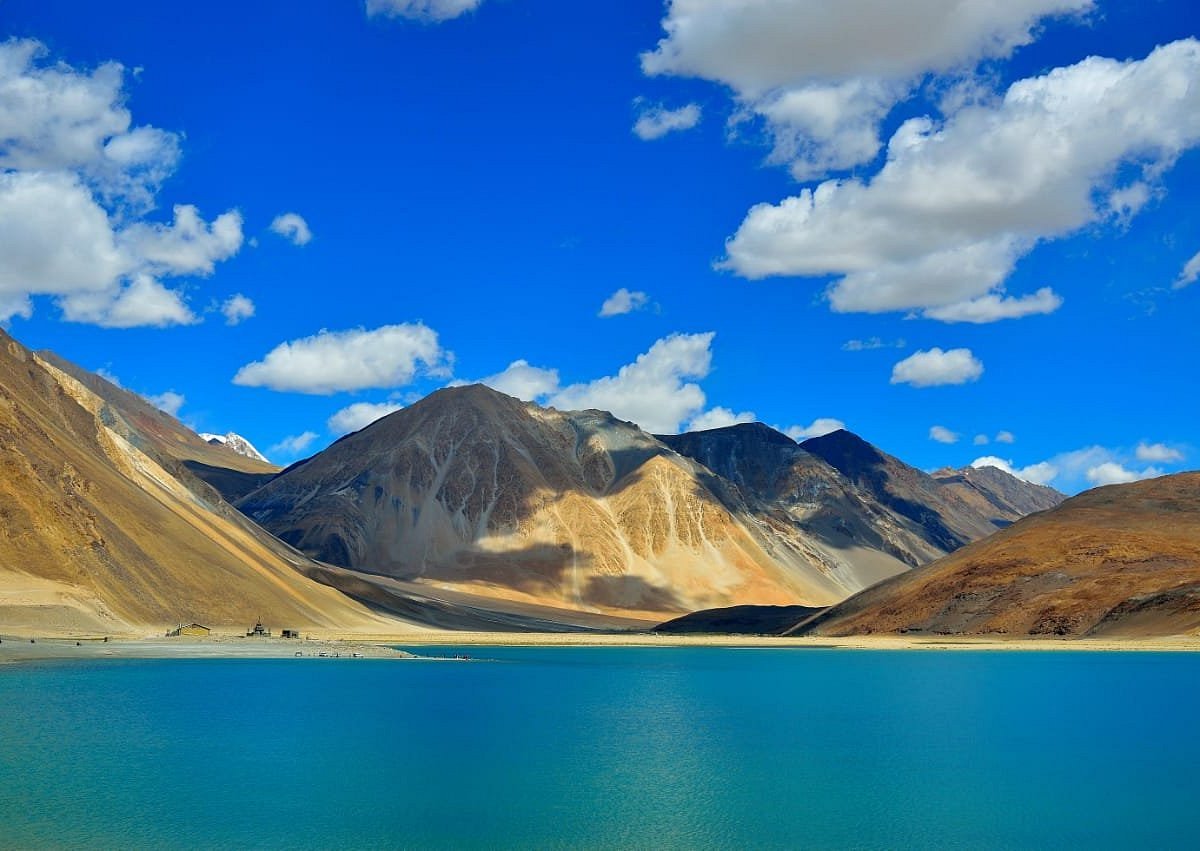 Pangong Tso
“The five colours of the prayer flags snapping in the wind stand for the five elements: blue for sky, white for air, red for fire, green for water and yellow for earth, strung together so that every breeze carries a blessing outward.”
“Buddhism took root here because Ladakh sat on ancient trade routes. Monks, merchants and ideas moved along them from Kashmir and Tibet, and their faith found a home in the valleys.”
“India’s reasons for caring about Ladakh run deeper than its beauty. It is a mountain frontier, the source region of the Indus, and a store of glacial water for millions of people downstream. Strategically, this land has rough terrain and is difficult to attack.”
He wrote it all down. I see that as an ownership of their enquiry; early practice in planning their own learning. That is what they gained in Ladakh.
It was also a place that invites a bigger question: how does anyone live out here, with scorching light, without water, and without warmth? Ladakh’s best-known name had the answer. Sonam Wangchuk, the engineer and education reformer from Ladakh, is the man whose life story inspired the character Aamir Khan played in 3 Idiots, the film that carried this region into the imagination of a generation. His real work is quieter and more practical. His answer to scarce water was the ice stupa, a conical artificial glacier that stores water in winter and releases it slowly as farm irrigation in summer. The first prototype, made in the winter of 2013, froze 150,000 litres into a six-foot cone, using gravity-fed pipes rather than electricity or machinery. Since then, over a dozen stupas have been built across the region, holding more than 25 million litres, and the work earned him a Rolex Award for Enterprise in 2016. His answer to the cold was the sun. The campus he designed runs entirely on solar energy, and uses no fossil fuel for cooking, lighting or heating, and his students built earth-and-mud houses that stay at around +15°C inside, despite it being –15°C outside. He has even designed a 30 kg solar-heated tent that can shelter ten soldiers at the border. For Changthang, the high pastureland plateau that cradles Pangong, his role has been that of a voice. Standing at the edge of the lake, the students were looking at a landscape whose future is still being shaped by engineers, nomads and policymakers alike, and that made the stillness feel less like a postcard and more like a responsibility. Students began to see the gap between who makes these choices and who is affected by them, and began developing a more grounded understanding of climate and sustainability as lived realities.
The next morning, at half past five, in the thin, freezing, golden half-light, the group watched the sun rise out of the water. The lake turned from steel to silver to a blush of rose, and every one of them stood a little straighter, as if the morning had asked for their best.
The Long Way Home
They left Pangong reluctantly, over Chang La, on the road curling through snow-brushed passes. The students were unusually quiet, the way people get when they sense they are leaving behind something that has changed them. At Thiksey Monastery, rising like a dream against its hill, they walked through courtyards that seemed to breathe; tracing staircases, prayer rooms and quiet corners with their eyes. By evening they were back in Leh, bargaining for small souvenirs and sipping hot tea in the golden hour, when everything feels like it matters.
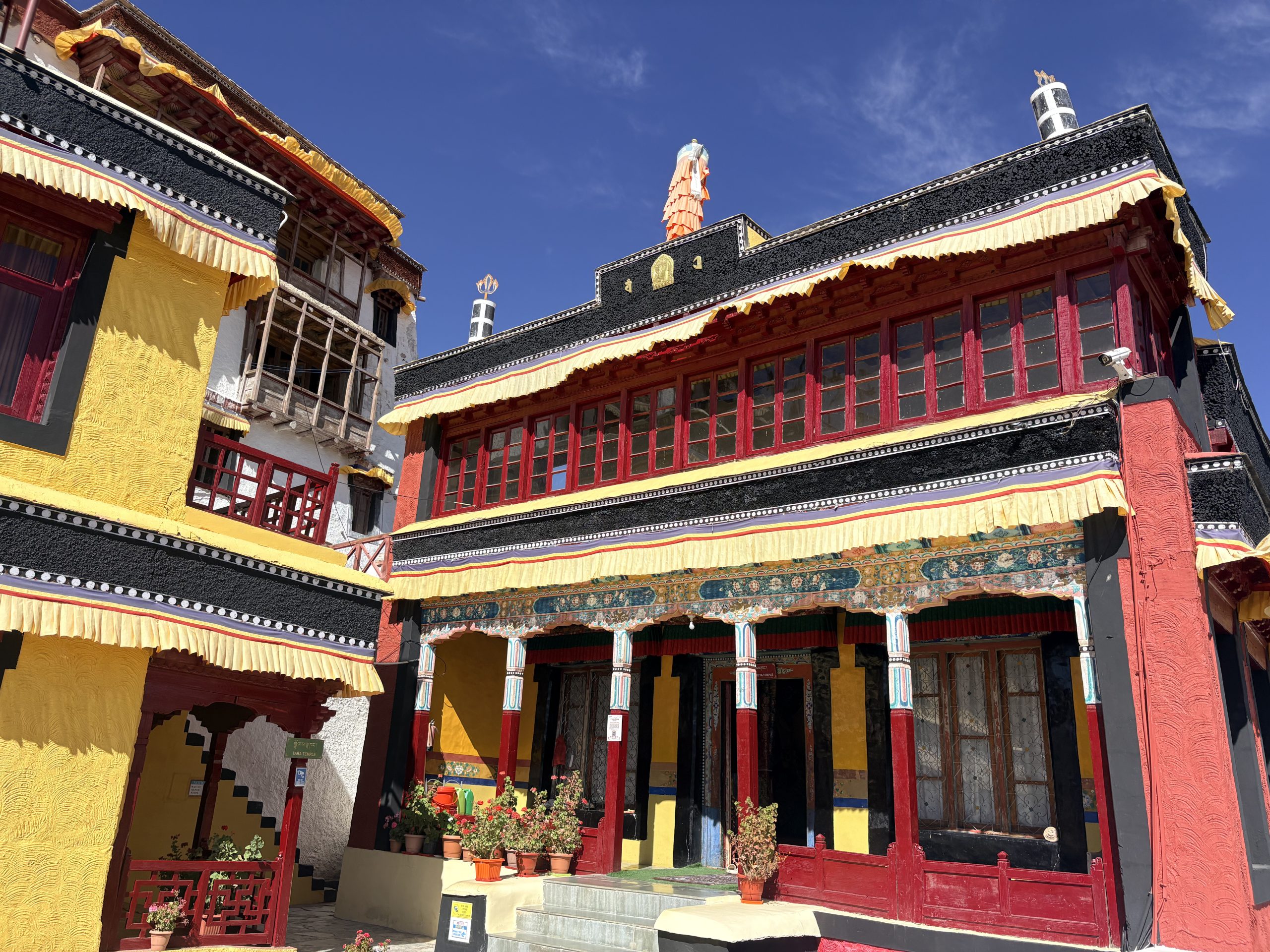 Thiksey Monastery
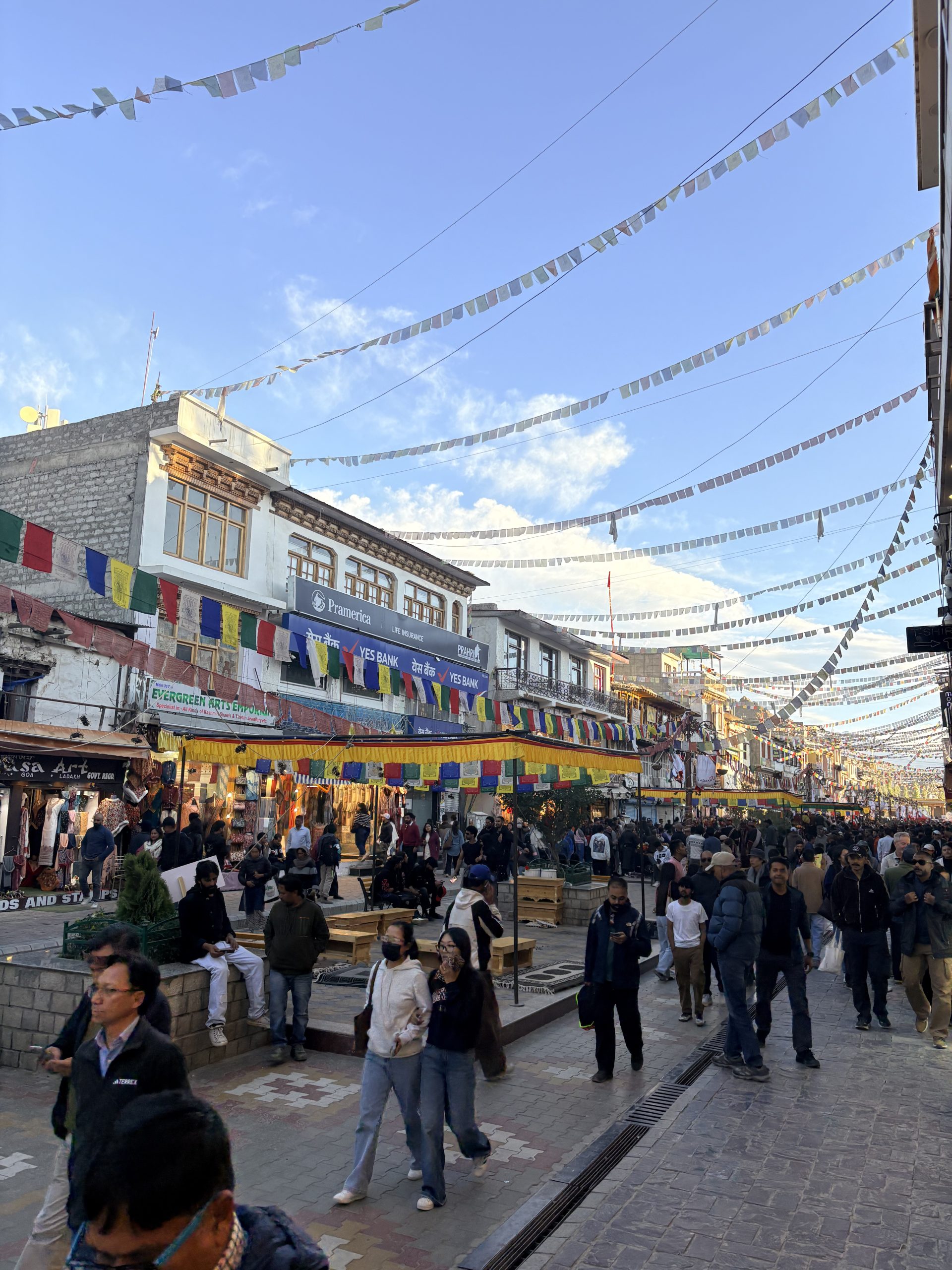 Leh Market
Then came the last morning, the airport, the goodbyes. Two flights home, two cities waiting, and forty-one students carrying back more than they had brought: sketches full of memories, phones full of sunsets, and a new way of looking at the world. “What a trip!” They exclaimed. The skills and rewards of working as one group across ages.
What Ladakh Leaves Behind
Ladakh does not shout. It teaches through silence, through scale, through light. It shows us that a landscape can be both fragile and fierce, that a place can be sparse and still be endlessly rich, and that the most unforgettable experiences are often the ones that ask us to slow down. For those who made the journey, Ladakh is no longer a name on a map. It is the colour of a lake at dawn, the sound of prayer flags in thin air, and the feeling of standing somewhere vast and realising that, for a little while, they all belonged to it. They went to Ladakh to study landscapes. They came back having been quietly rewritten by it. It might be the question the whole journey leaves us with: if one land can hold several faiths, secure a border and birth mighty rivers all at once, what do we owe it in return?

Frequently Asked Questions
How are activities structured during a trip like this?
Every activity is designed around specific learning goals, using hands-on tasks, real-world challenges, and guided exploration to make STEM meaningful.
Are the certification programs recognized?
Yes! Our certifications are led by subject experts and aligned with global learning standards and Sustainable Development Goals (SDGs).
What age groups are best suited for these journeys?
We customize activities for levels from primary to high school, ensuring every student is both challenged and supported.
How can I enroll in these curriculum-aligned programs?
It’s easy! Visit happymiles.in and send us your query. One of our subject matter experts will reach out with all the details you need.
The programs sound amazing, but what about affordability?
At Happymiles, we believe quality education and life skills should be accessible to all — regardless of financial background. That’s why we offer flexible EMI options, scholarships, and seasonal discounts. We want students to focus on learning — and we’ve got your back every step of the way.
