
Bhutan
Duration: > 5 Days
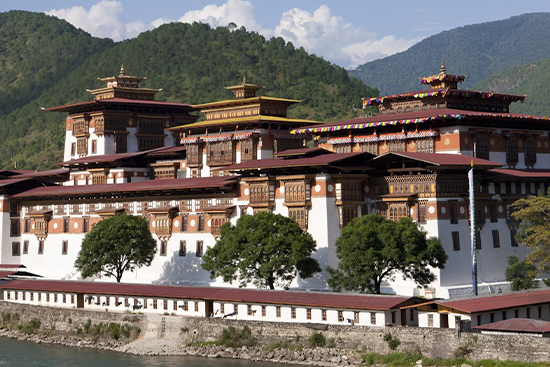
Bhutanese architecture is distinctive and deeply rooted in the country's cultural and religious traditions. The architecture of Bhutan reflects a harmonious blend of aesthetics, functionality, and spiritual significance. Bhutanese architecture reflects the country's commitment to Gross National Happiness (GNH) and the preservation of its unique cultural and spiritual heritage. The designs not only showcase aesthetic beauty but also contribute to the well-being and identity of the Bhutanese people.
Learning Outcomes
- Learn how Bhutanese architecture emphasizes harmony with nature. Understand the use of local materials, sustainable building techniques, and the integration of structures into the natural landscape to maintain ecological balance.
- Gain insights into traditional Bhutanese building techniques, including the use of rammed earth, stone, and timber. Understand how these techniques contribute to the durability and resilience of structures in the Bhutanese climate.
- Understand how traditional Bhutanese houses, farmhouses, and communal spaces are designed to promote social interactions and a sense of community.
- Learn about Bhutan’s commitment to preserving its architectural heritage. Explore how government policies and regulations encourage the use of traditional designs and materials, contributing to the conservation of cultural identity.
- Examine the architecture of Bhutanese farmhouses, including their functional design and integration with agricultural practices.
- Explore how Bhutanese architecture has adapted to modern needs while preserving traditional elements.
- Study the influence of Buddhism on Bhutanese architecture, including the design of monasteries, stupas, and religious symbols.
Itinerary
After arrival at Bagdogra Airport, transfer to Phuentsholing.
Drive to Thimphu. We will visit Tashichho Dzong, which is a Buddhist monastery and fortress. Then visit Buddha Point. It has become a must-see tourist attraction in Thimphu Valley as one of the world’s largest Buddha statues.
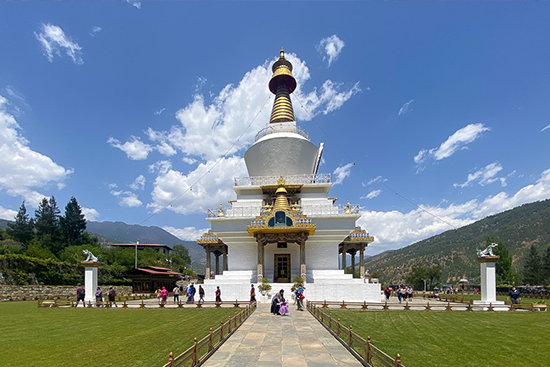
Listen to a talk on Bhutanese architecture, followed by a hike to Tango and Cheri monasteries; visit the National Memorial Chorten; the Folk Heritage Museum; and the National Textile Museums. End your day with a traditional Bhutanese dinner.
Checkout and drive to Punakha via Dochula Pass. If time permits, visit Talo Nobgang Village. Then visit Dorji Lhuendrup Nunnery, a meditation center for nuns at Nobgang Monastery.
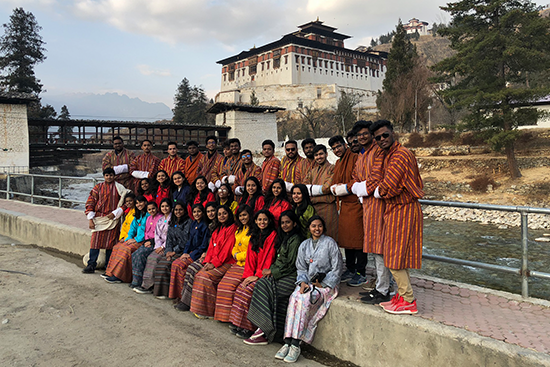
Check out and proceed to Paro. En route, visit Simtokha Dzong, pass the Chuzom Bridge at the confluence of the Wang Chhu and Pha Chhu rivers, and view three nearby shrines featuring Bhutanese, Tibetan, and Nepali architecture. National Museum of Bhutan and Paro Dzong.
Proceed for a hike up to Tiger’s Nest (4-hour hike). Eveing will be free for shopping at Paro.
Check out & Transfer Phuentsholing. We will enroute a visit to Kharbandi Goemba, a monastery located amongst a garden of tropical plants and flowers. then later visit Zangthopelri Temple.
Departure.
Inclusions
- Accommodation
- Meals
- Sightseeing and transfers by AC Coach
- Guided Tour
- Insurance and Taxes
- Entry Fee
- Tour Manager
- Snacks and Mineral Water


Shaista Syeda
Admissions Counsellor, LISAA School of Design
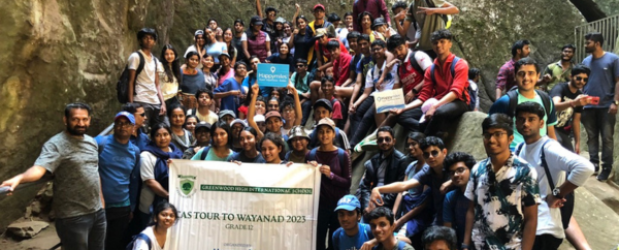

Nishanth Nagavar
Vice Principal, Greenwood High
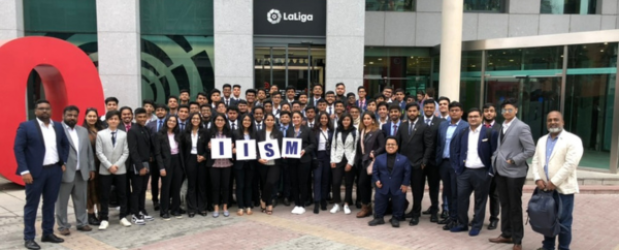

Amit Gupte
COO, IISM


José Moya Gómez
Director, La Liga Business School
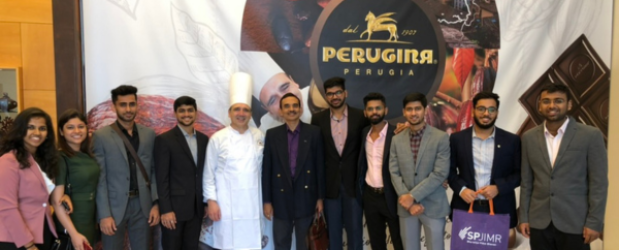

Shiva Kumar Mani
Faculty, SPJIMR
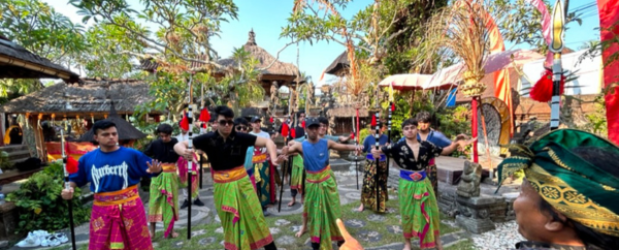

Shahrokh Dinyarian
CAS Coordinator, Ecole Mondiale World School

Dr. Mamatha P Raj
Director & Professor, BMS College of Architecture

Rachayita Ghosh
CAS Coordinator, The International School Bangalore
