
How Seoul Thinks…
A Study Tour That Redefines What a Classroom Can Be
For educators who believe that the world is the best classroom — this is what happens when you take students to Seoul and ask them to look carefully. Not at K-pop or K-dramas, but at what sits beneath them: centuries of design thinking, cultural precision, and a society that never chose between memory and ambition.
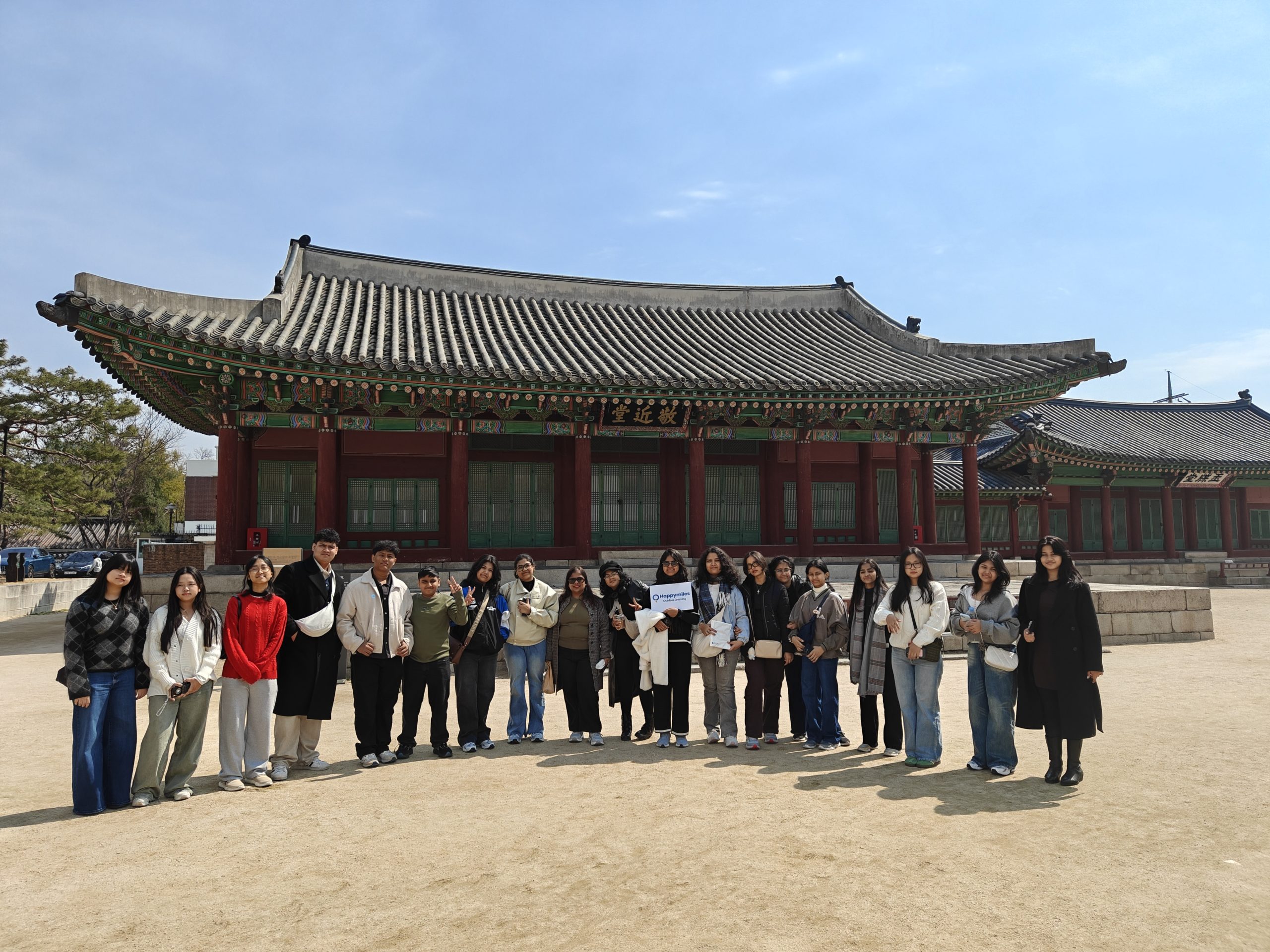
01 · Before the First Palace — A Shared History
When the world thinks of South Korea, it thinks of BTS, glittering K-dramas, and cutting-edge technology. But what if those weren’t separate phenomena — what if they were all symptoms of something far older, and far more deliberate? That is the question our students carried with them through Seoul. And the city, patient and layered as it is, answered — not in any single moment, but gradually, the way all the best lessons arrive.
We began at the War History Museum, where an unexpected discovery stopped us in our tracks. India’s 60th Parachute Field Ambulance had served on Korean soil for four years, treating over 200,000 patients — soldiers and civilians alike — earning the name “Angels in Brown Berets.” India had chosen not to fight in that war. It had chosen, instead, to heal it.
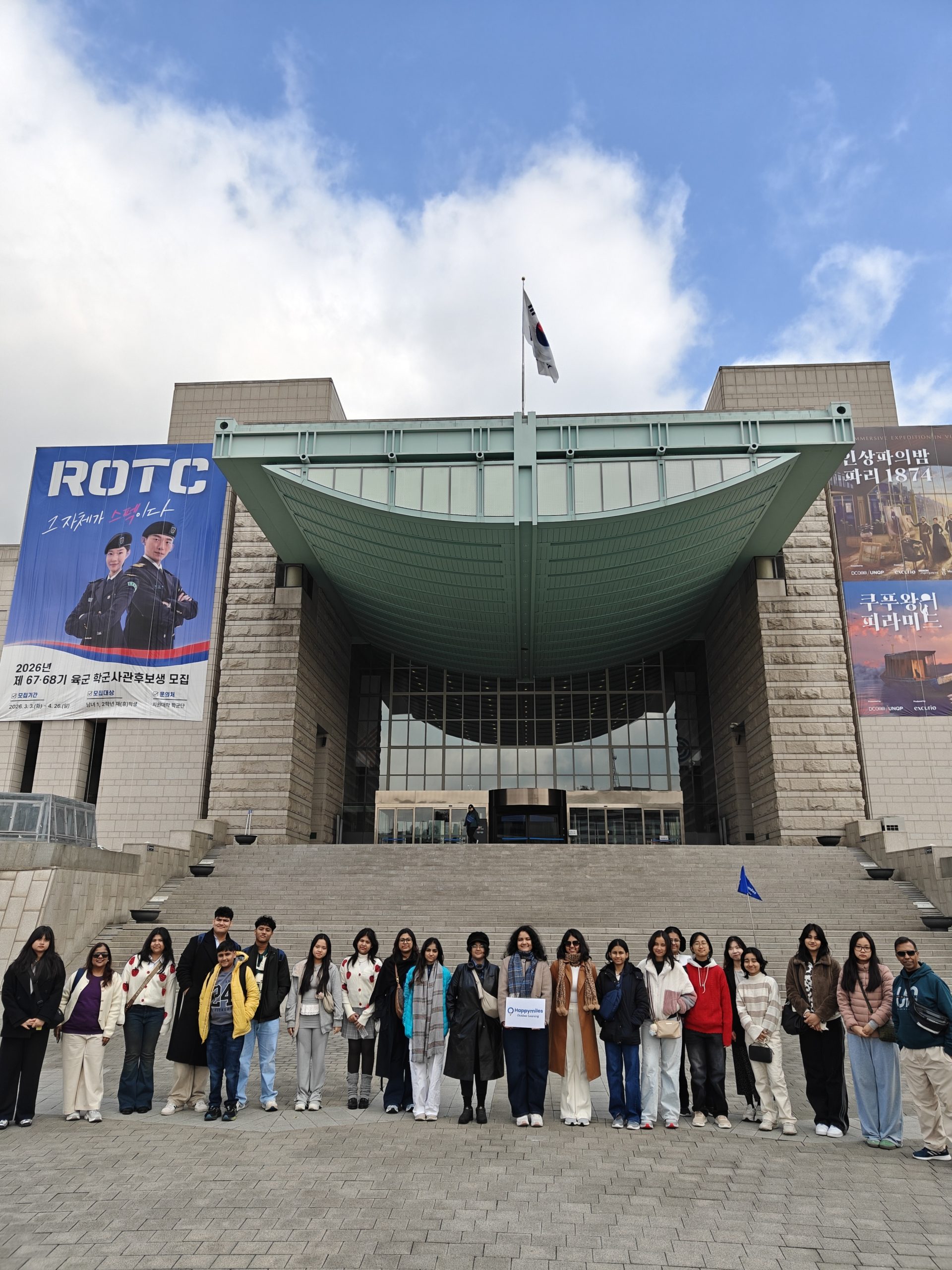
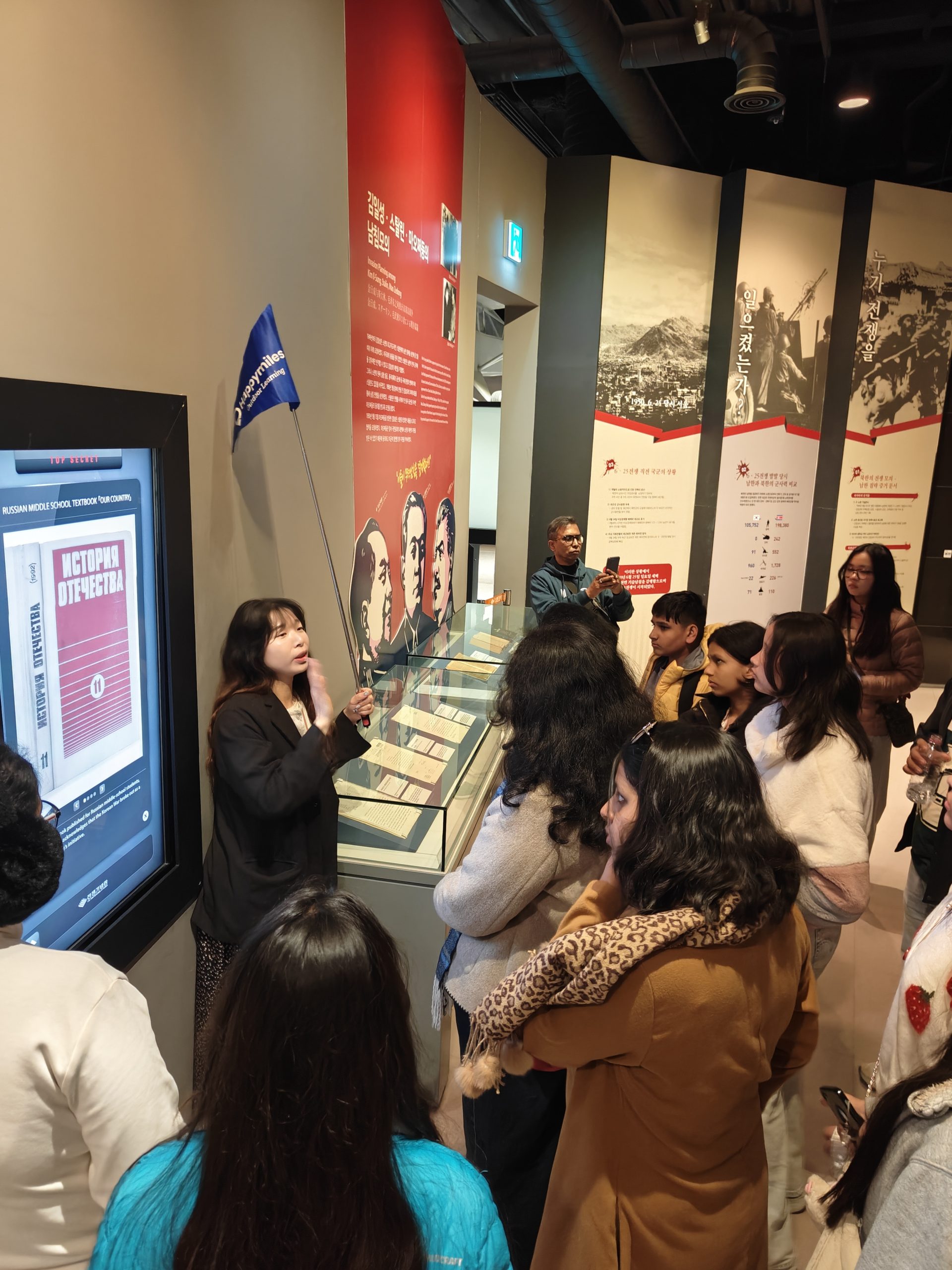
"India had chosen not to fight in that war. It had chosen, instead, to heal it. A quiet but profound distinction — and a shared history that few people on either side have ever been told."
This discovery is the kind of revelation that no textbook delivers and no classroom can manufacture. Seoul had already begun teaching before we had reached a single palace.
FOR EDUCATORS — CAS CONNECTION
Service CAS: Students reflect on what it means for a nation to choose healing over combat, and how individual choices shape historical legacy.
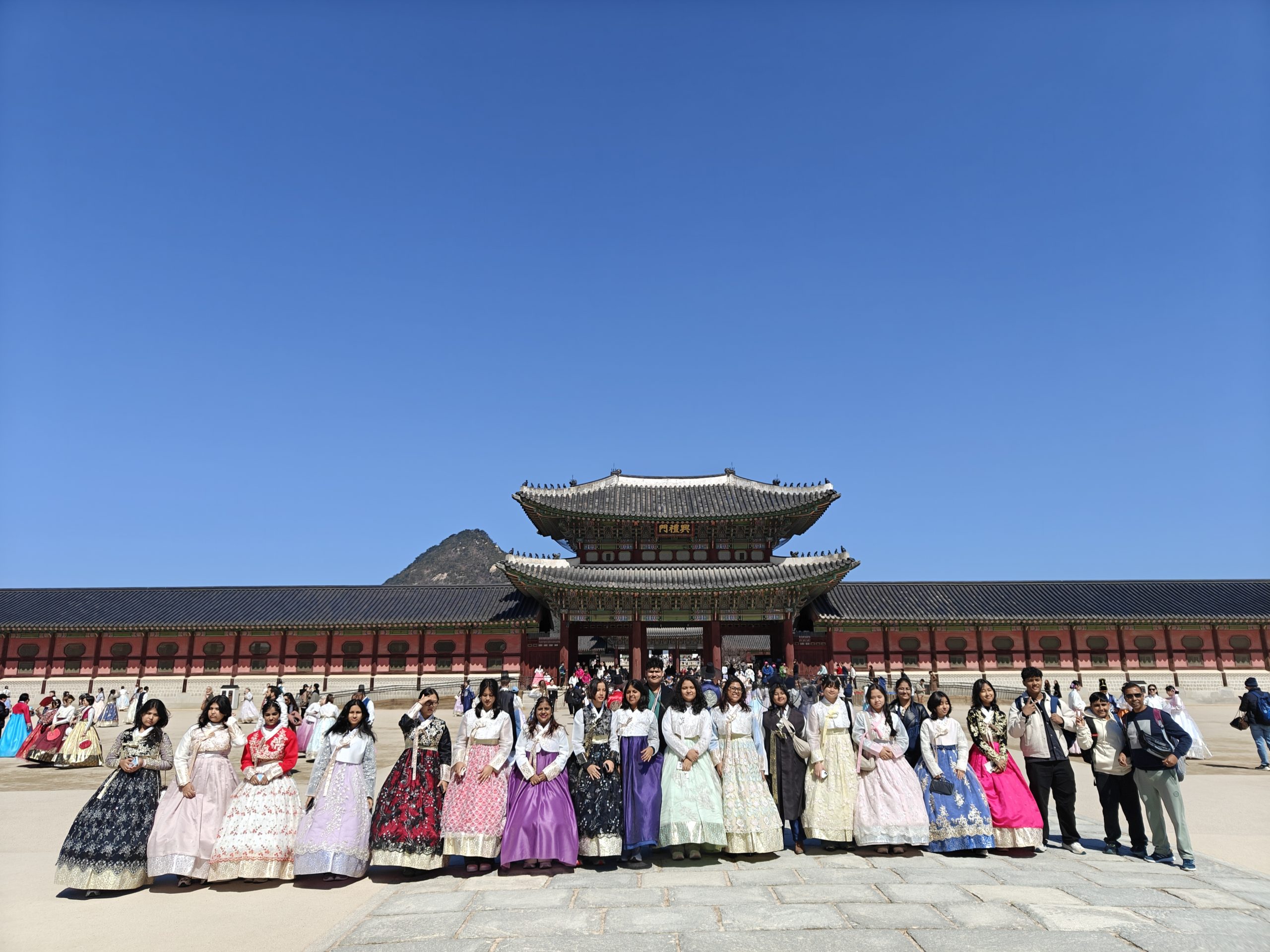
02 · Myths and Logics — Gyeongbokgung Palace
Some buildings speak. Gyeongbokgung Palace doesn’t just speak — it argues, reasons, and remembers. As our students stepped through the gates of the first palace of the Joseon dynasty, the learning didn’t begin politely. It arrived like a cold wind off the mountains — immediate, clarifying, impossible to ignore. Our students shed their tourist instincts, slipping into traditional hanboks and taking on a different role entirely: architectural detectives.
The question posed before crossing the threshold: How does a Korean palace think differently from an Indian one? Both traditions encode hierarchy. Both reach for symbolism in stone, wood, and proportion. But Gyeongbokgung speaks a dialect shaped by survival. Korea’s winters are brutal, months-long negotiations with cold — and every design choice here is an answer to that negotiation.
"The platform is a furnace. The floor is a radiator. The palace is a machine for living through winter."
Beneath those elegant raised platforms, wood fires burned in underground chambers, channelling heat through stone passages that warmed the very ground people walked and slept on — a system so ingenious it became the blueprint for Korea’s modern underfloor heating. The colour palette, material selections, the orientation of each structure — none of it is arbitrary ornamentation. Every element is a solution: to climate, to culture, to the careful choreography of power.
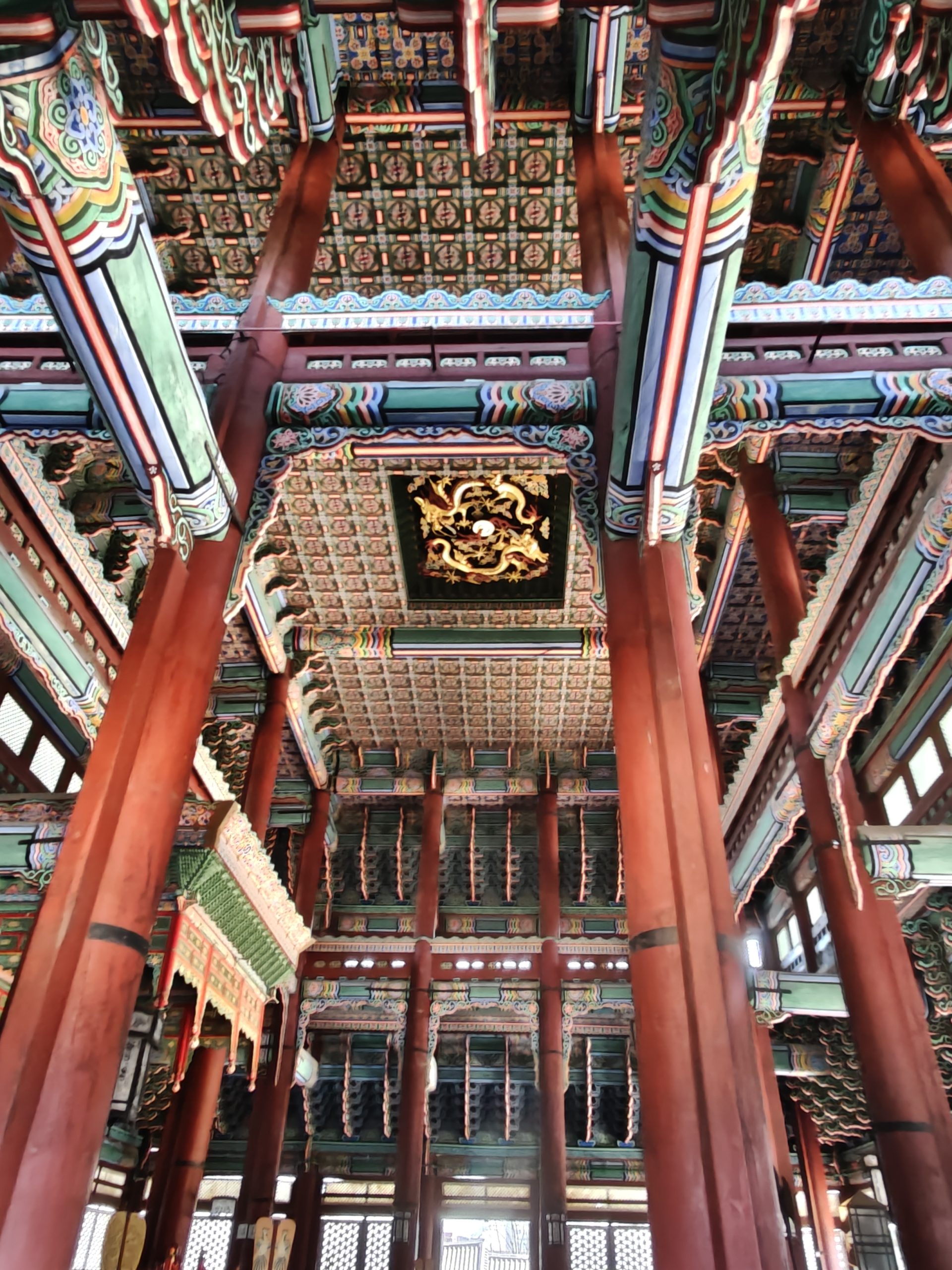
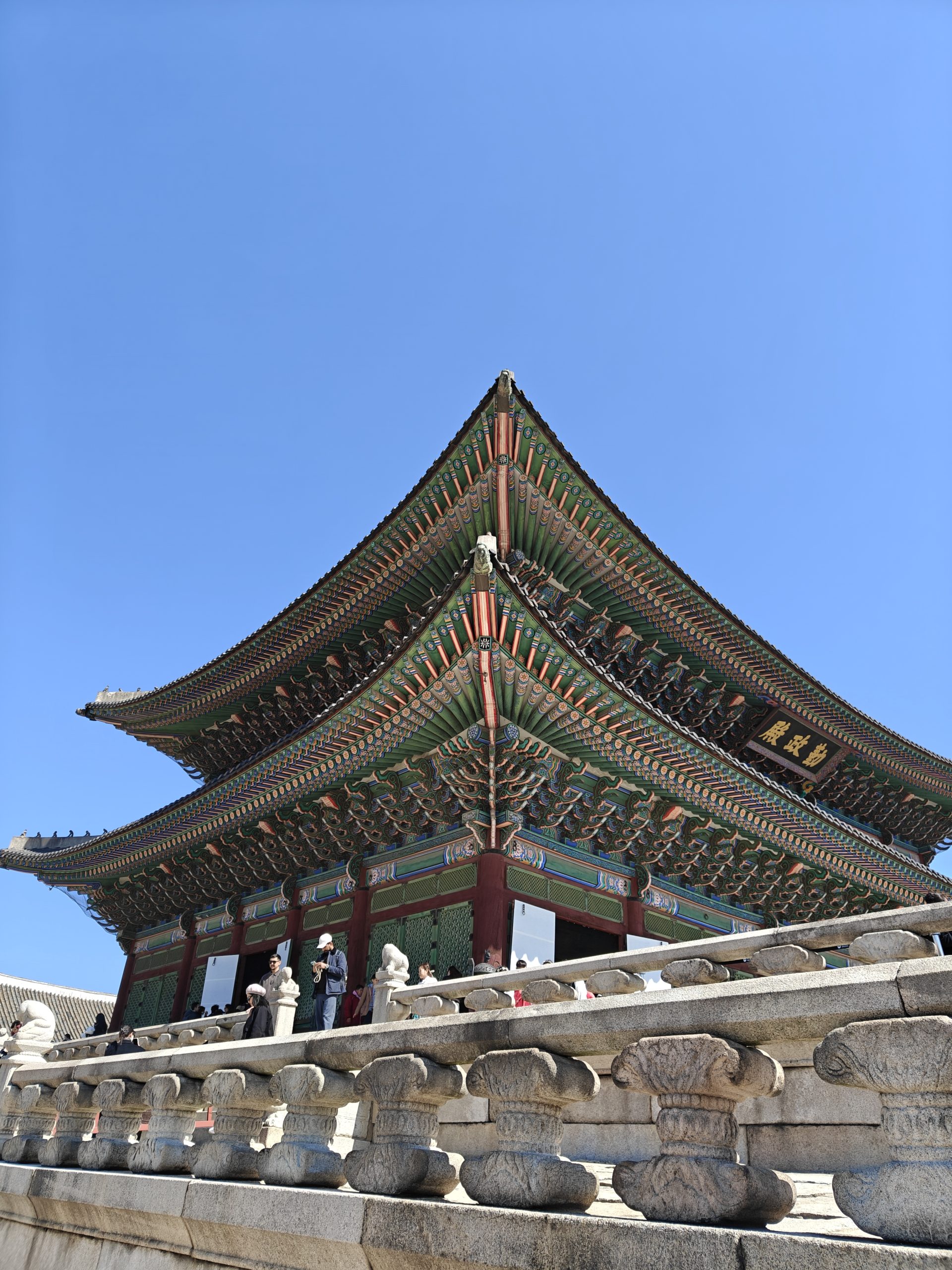
Architecture is not decoration applied to engineering. It is encoded wisdom — centuries of answered questions, frozen into form, waiting for someone curious enough to ask them again.
FOR EDUCATORS — CAS CONNECTION
Creativity CAS: Students document architectural solutions as design briefs — identifying the problem each element solves, then applying that thinking to a design challenge in their own environment.
03 · The Whisper in the Shadow — Saemoonan Church
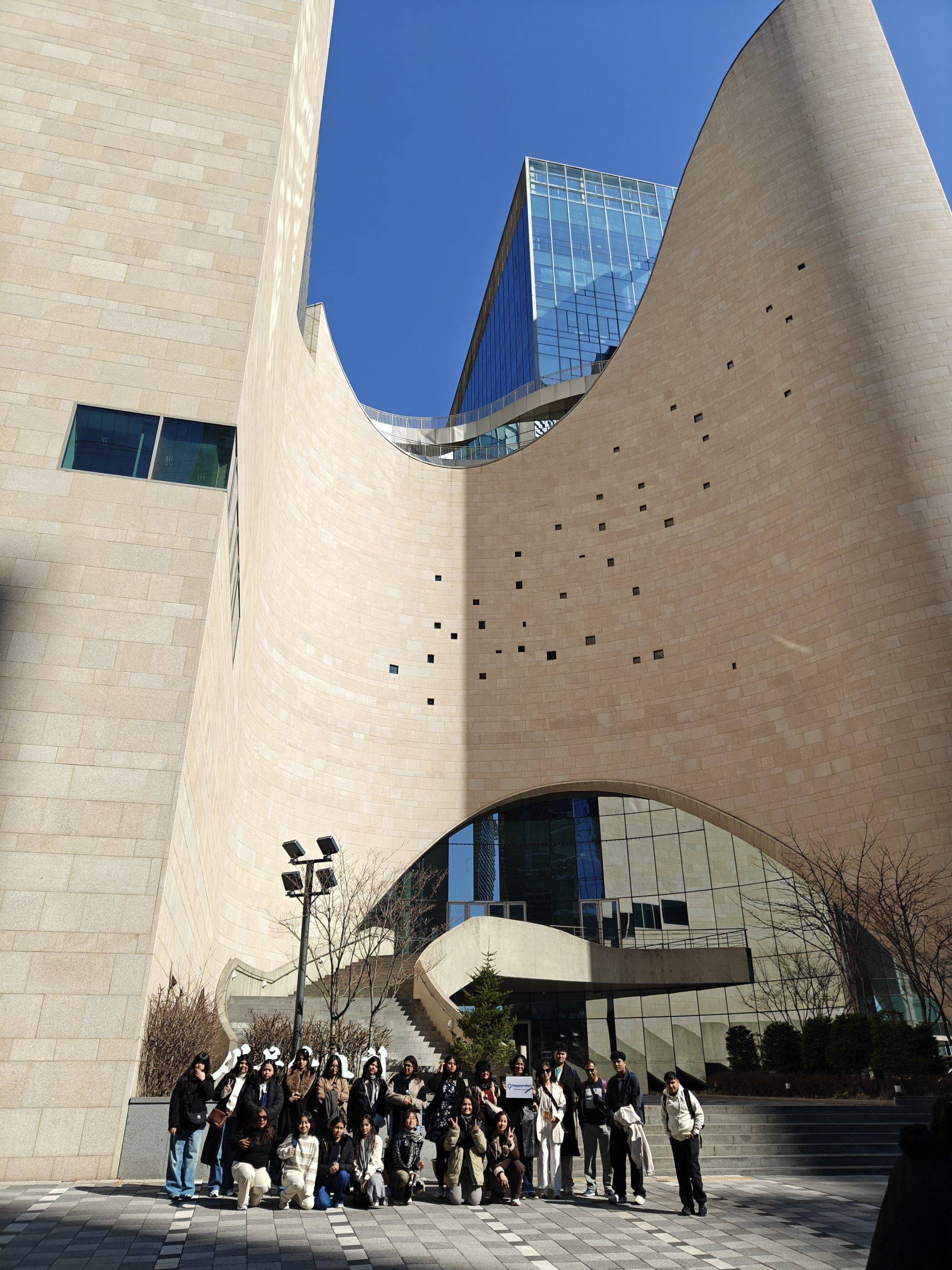
Saemoonan Church rises in the Gwanghwamun district — close enough to Gyeongbokgung that the two exist in the same breath of the city. A modern monument standing in quiet, almost confrontational dialogue with those dynastic walls. No transition, no apology. Just two eras, shoulder to shoulder, each refusing to diminish the other. This is Seoul in a single glance: tradition and innovation coexisting, sometimes uneasily, always honestly.
We gathered in the church’s shadow — and it is genuinely a shadow, the kind that only monumental scale can cast. And it was there that a concept began to whisper.
"What if the building is a pair of arms? Scale isn't ego. Scale is embrace. The overwhelming height doesn't diminish the individual standing beneath it. It receives them."
The entire façade was deliberately designed as a mother opening her arms — curved stone walls extending forward on either side, two towers rising like an embrace offered to the street. The concept wasn’t our insight arriving from nowhere. It was already built into the stone. We had simply felt it before we knew it.
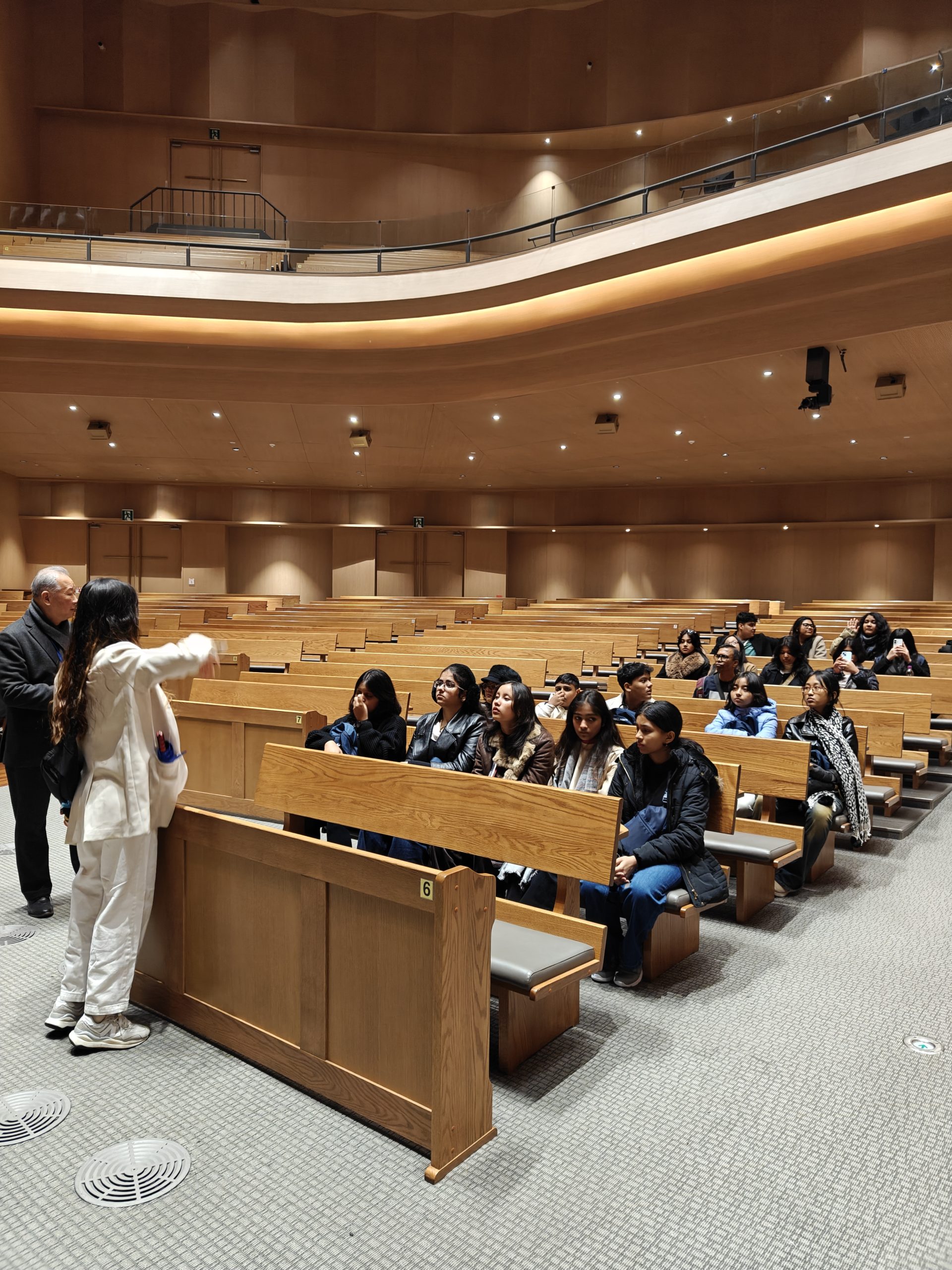
Saemoonan is not merely a place of worship — it is the oldest Protestant church in Korea. A vast auditorium where prayers find their full voice. Seminar halls and education rooms where thought is passed forward. A small chapel built using the original church’s old bricks — history made tangible, literally embedded in the walls. And a front plaza deliberately designed as open public space, not a forecourt for the faithful but a resting place for the whole neighbourhood.
The building doesn't just house faith. It nurtures the people who carry it — and the city that surrounds them.
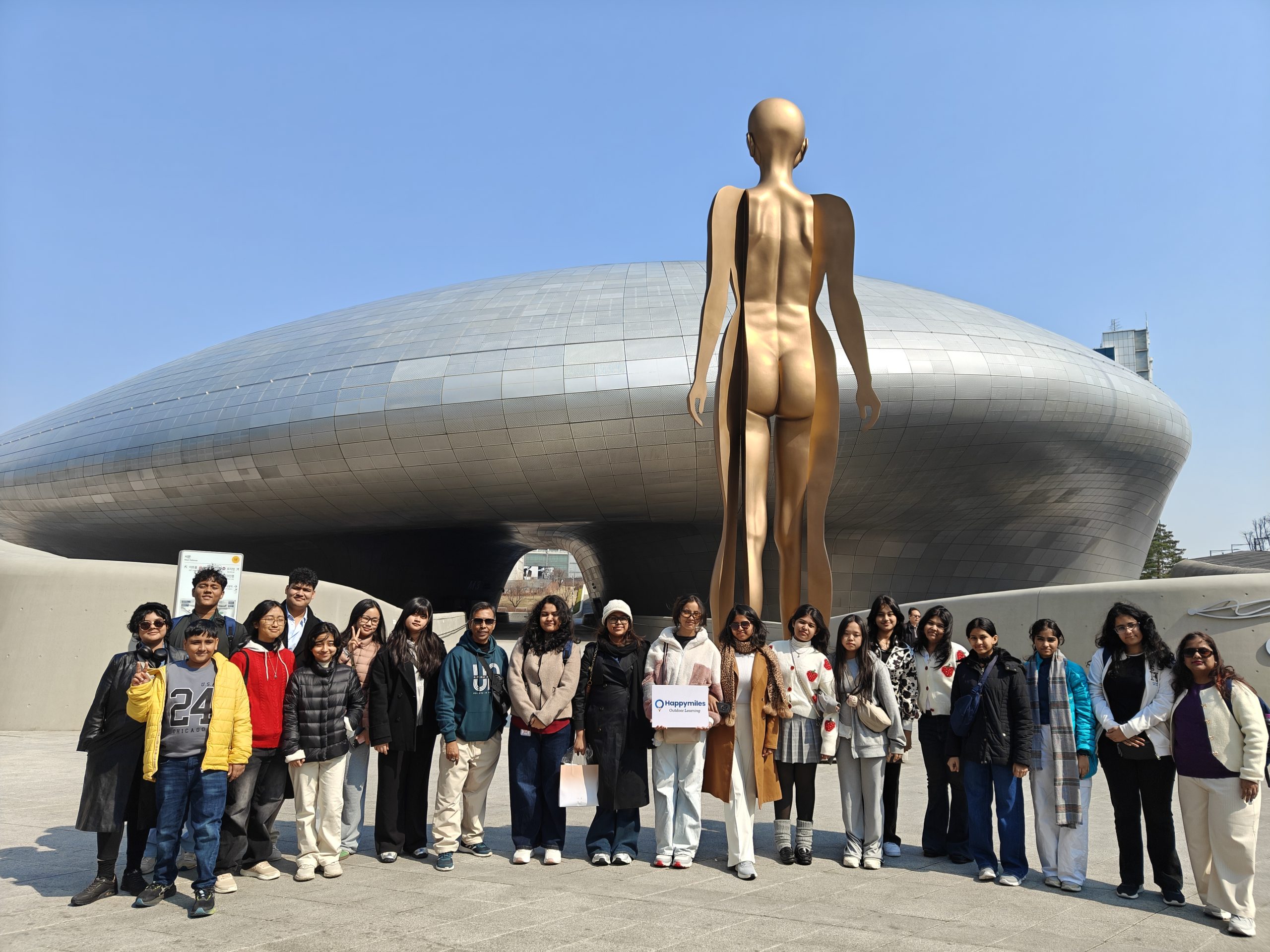
04 · The Spaceship on Sacred Ground — Dongdaemun Design Plaza
If Gyeongbokgung is Korea’s memory, the Dongdaemun Design Plaza is its restless, brilliant imagination — and perhaps its most honest self-portrait. Because the DDP doesn’t choose between past and future. It refuses to.
Designed by Zaha Hadid, the building rises from ground that has been many things and forgotten none of them. In the Joseon era, a fortress wall stood here. Then came the military training grounds of the royal army. The 20th century brought Dongdaemun Stadium, roaring with crowds. Each era buried itself into the layers below, and the site absorbed it all, quietly, without erasure. What stands here now is not a replacement. It is a response.
One of our students, pausing mid-step and looking up at the sweeping silver mass, said it perfectly: “It looks like a spaceship has landed on historical ground.” She wasn’t wrong — but she also wasn’t entirely right. Because a spaceship implies arrival from elsewhere. The DDP feels like it emerged from the ground itself, like the accumulated pressure of all those layered histories finally found a form fluid enough to contain them.
"Resilience, it turns out, doesn't look like rigidity. It looks like this: curved, unboxed, endlessly adaptive. There isn't a straight line in the building's gesture."
Students wandered through exhibition areas, tracing vertical connections that guide movement the way a river guides water: not by force, but by invitation. The lesson arrived without announcement: spaces are not static containers. They are dynamic environments. A room isn’t a box you stand inside — it’s a condition you inhabit, one that either opens thinking or closes it.
Modern Korean design isn't turning its back on the past. It's learning from the most honest thing the past has to offer — the evidence that nothing survives by staying fixed. Fluidity isn't forgetting. It's the highest form of memory.
FOR EDUCATORS — CAS CONNECTION
Creativity CAS: Students design a response building — given a historical site, what form would their building take if it had to honour every layer of that site’s past?
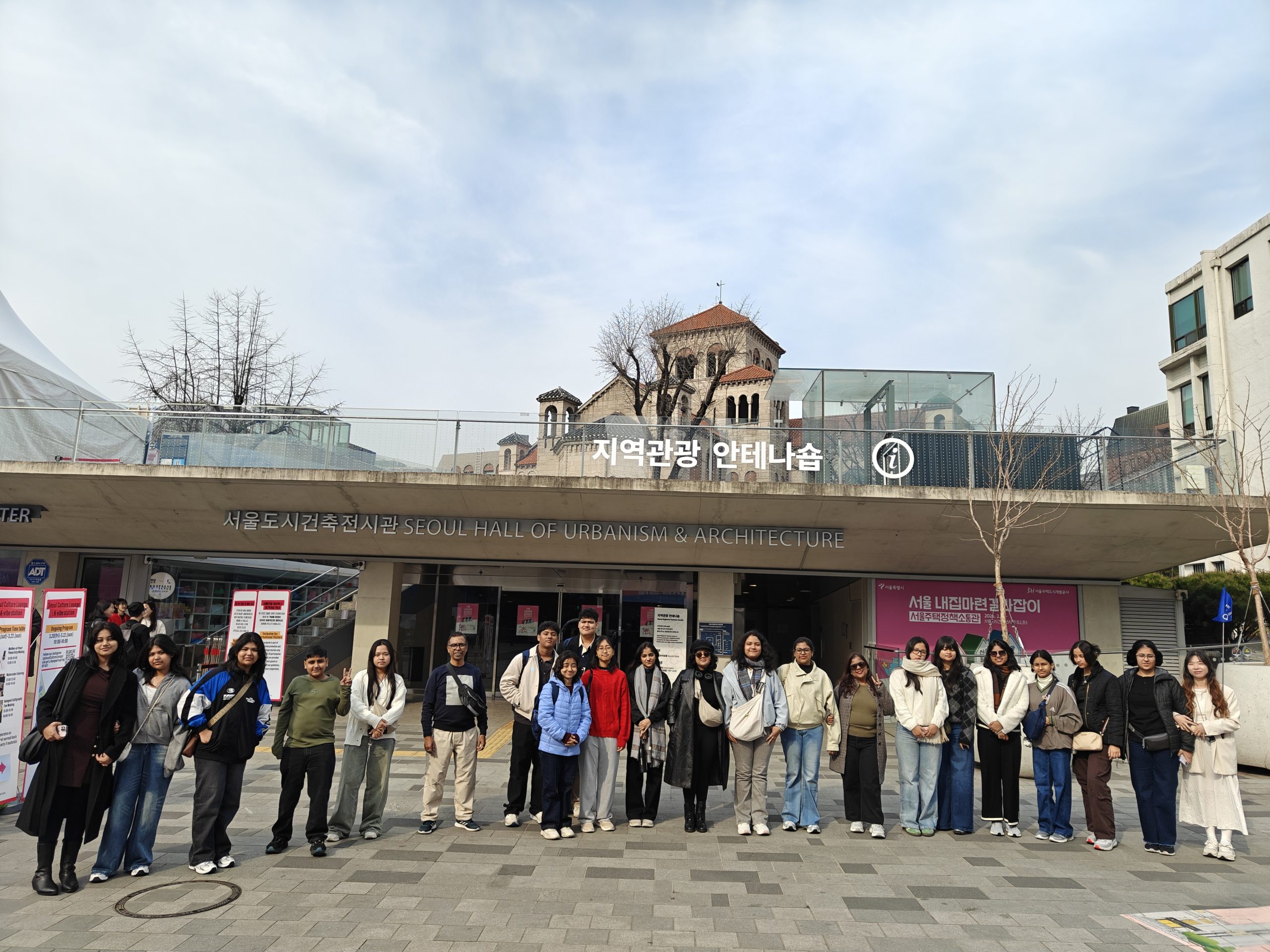
05 · Behind the Curtain — K-Pop Centre & KBS Broadcasting
This architectural philosophy extends to Korean storytelling itself. At the K-Pop Centre, students encountered the meticulous backdrop design that frames Korea’s entertainment industry — every lighting choice, every spatial decision, deliberate. Then came a live performance: a fearless fusion of art, dance, and comedy that showed how Korean creatives blend disciplines without apology.
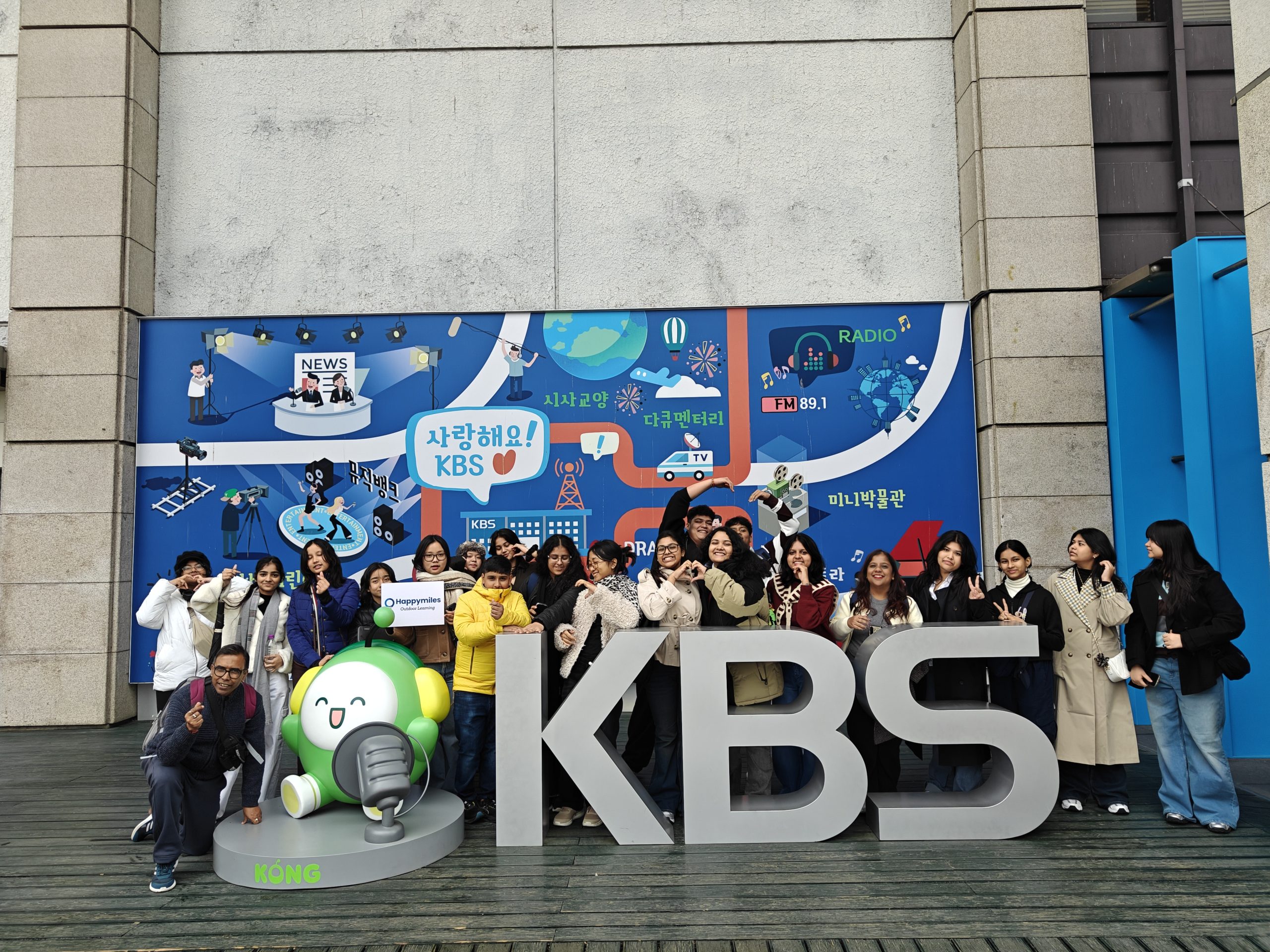
At KBS Broadcasting Station, students toured facilities producing thirty-two channels and tried their hand at news reporting and audio narration, discovering that K-dramas aren’t accidents of brilliance — they’re products of a system that has learned to blend technical excellence with emotional precision. We visited filming locations around Seoul where students began to see how architecture, light, and urban design become characters themselves in Korean narratives.
06 · The Wisdom of Everyday Things — Hanok Houses & Market Lanes
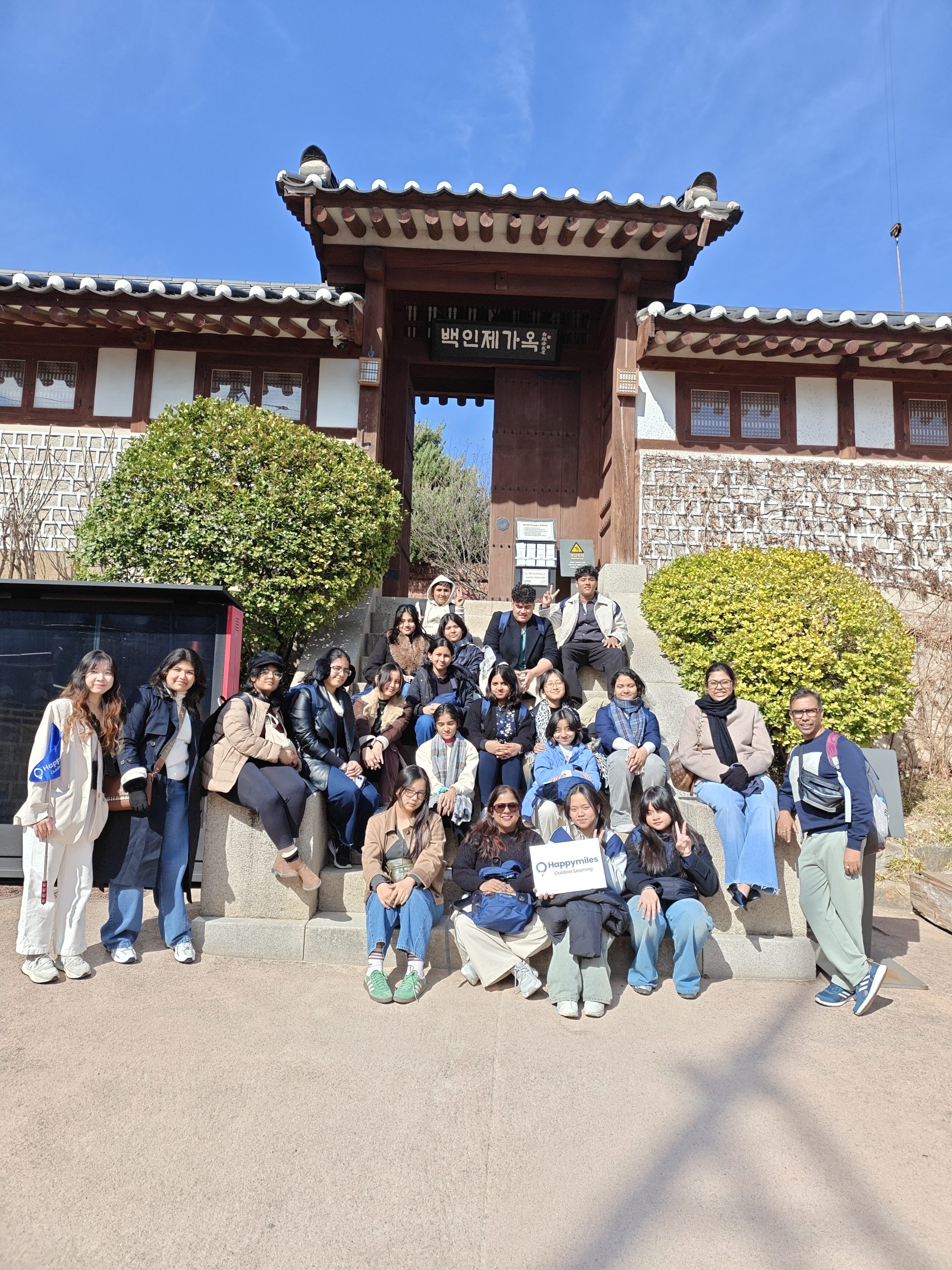
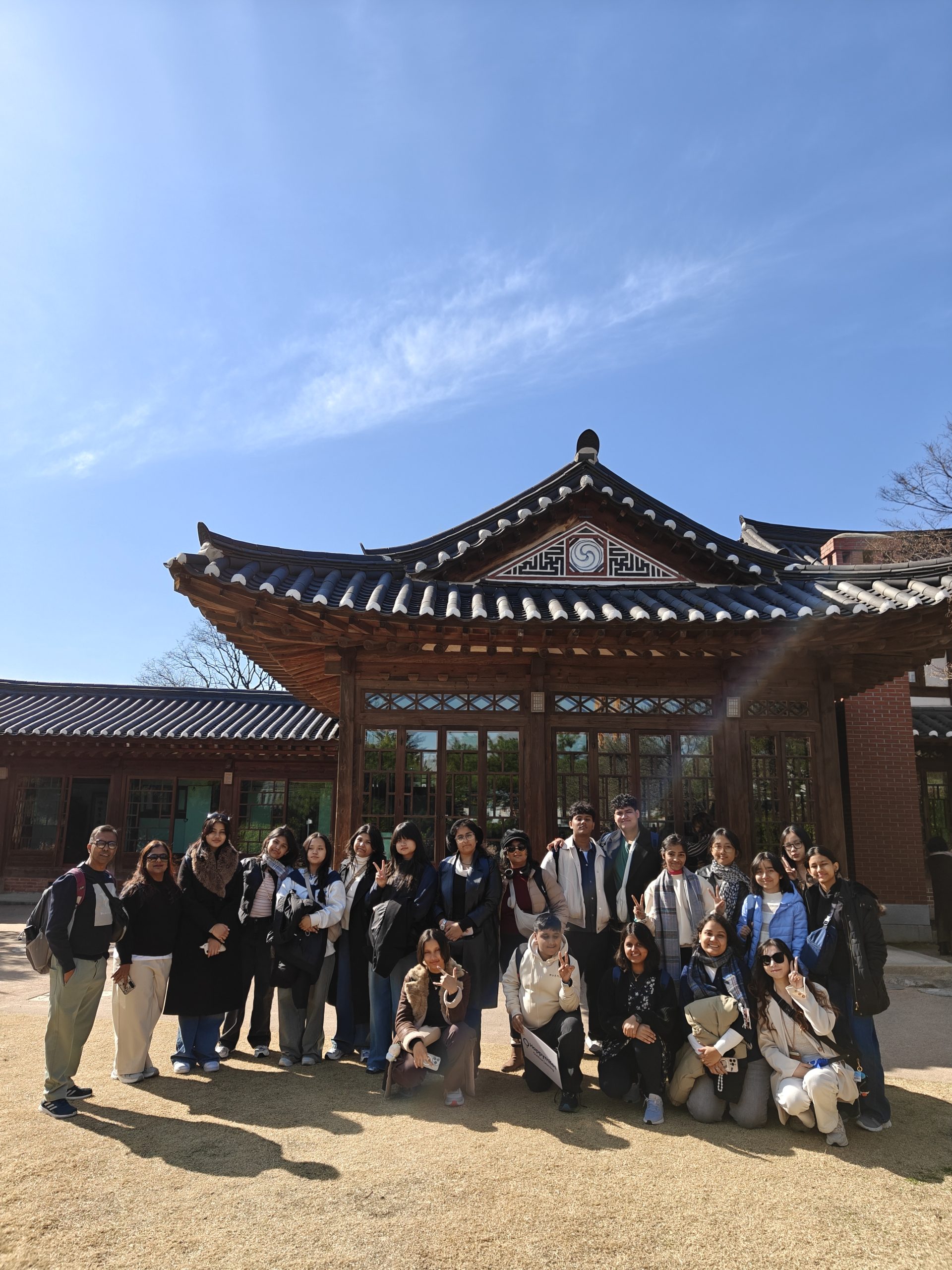
Understanding Korea isn’t only about grand institutions. The traditional hanok houses revealed the same principles uncovered at Gyeongbokgung — wooden construction, ondol heating, climate-responsive design — not as royal luxuries, but as fundamental solutions woven into ordinary Korean life for centuries.
"Great design doesn't announce itself. It solves problems so elegantly that it becomes invisible."
Every meal became its own education. From egg buns to grilled specialties eaten in narrow market lanes, each dish carried history, technique, and quiet regional pride — the same balance of boldness and restraint we’d been tracing in stone and steel all week.
07 · When Your Hands Remember — Mother-of-Pearl Workshop
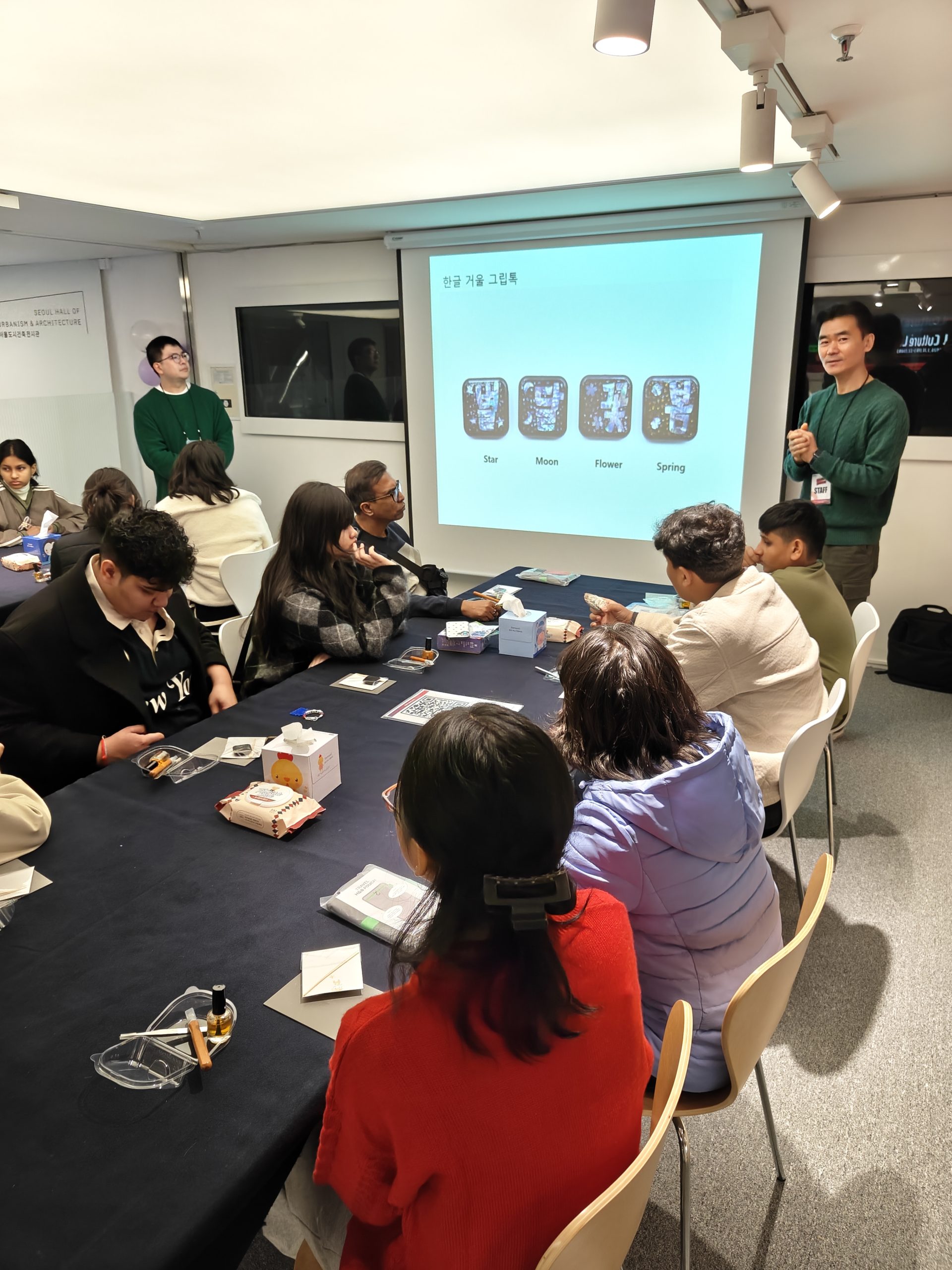
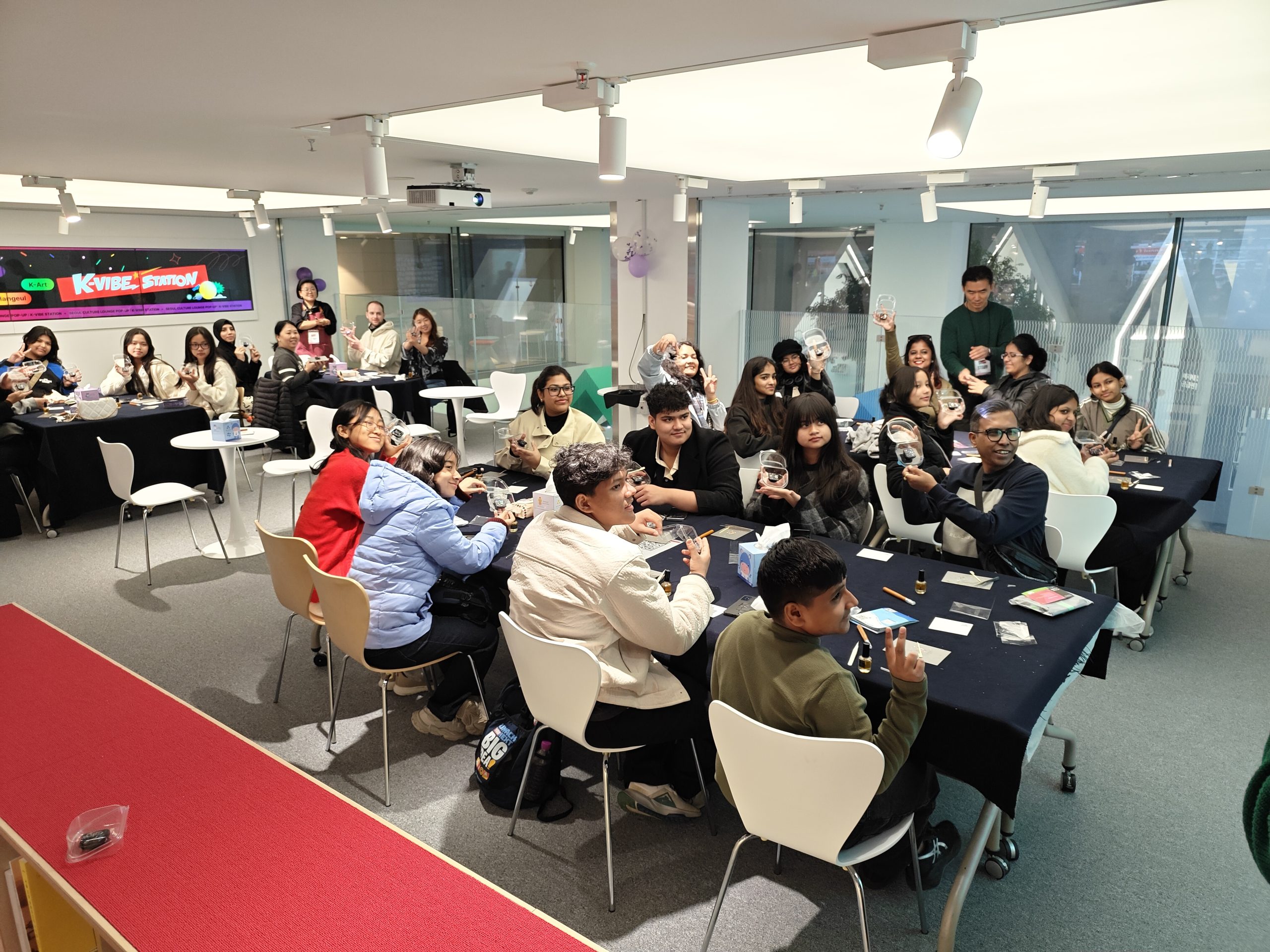
The pinnacle came at the Seoul Hall of Urbanism and Architecture, in a traditional mother-of-pearl workshop led by Korean artisans. Students were handed delicate shell pieces and taught techniques passed down through generations — the same craftsmanship principles visible in palace decorations centuries earlier.
As they carefully inlaid mother-of-pearl into wooden frames, something shifted. They weren’t learning about Korean culture anymore. They were participating in it. Their hands were doing what Korean hands had done for centuries, and in that continuity, they grasped something no textbook can teach: culture is living, transmissible, and when you engage with it authentically, it changes you.
FOR EDUCATORS — CAS CONNECTION
Service & Creativity CAS: Students reflect on a craft from their own culture that risks being lost — and plan a practical way to document or transmit it to their community.
They arrived wondering why the world was obsessed with K-pop and K-dramas. They left understanding it isn't mysterious — it's methodical. Korea doesn't choose between memory and ambition. It weaves them together, with such precision that the seam becomes invisible. That's the lesson Seoul keeps offering anyone patient enough to look past the performance. And that's the lesson Happymiles is committed to placing in front of every student we take there.

Frequently Asked Questions
How are activities structured during a trip like this?
Every activity is designed around specific learning goals, using hands-on tasks, real-world challenges, and guided exploration to make STEM meaningful.
Are the certification programs recognized?
Yes! Our certifications are led by subject experts and aligned with global learning standards and Sustainable Development Goals (SDGs).
What age groups are best suited for these journeys?
We customize activities for levels from primary to high school, ensuring every student is both challenged and supported.
How can I enroll in these curriculum-aligned programs?
It’s easy! Visit happymiles.in and send us your query. One of our subject matter experts will reach out with all the details you need.
The programs sound amazing, but what about affordability?
At Happymiles, we believe quality education and life skills should be accessible to all — regardless of financial background. That’s why we offer flexible EMI options, scholarships, and seasonal discounts. We want students to focus on learning — and we’ve got your back every step of the way.
