
Defining Community Service in CAS: A Journey of Empathy and Well-being in Bhutan
When travel becomes more than an itinerary, and service becomes more than an activity.
The Question We Started With
Every service project begins with a few honest questions. Who needs support? Which community should we approach? What will our presence actually change? And what will our students take away?
When we sat down to design this IB CAS journey, we knew what we didn’t want: another trip of ticked-off visits that students forget by the time they unpack. We wanted something more personal. A chance to sit with people, listen, work side by side, and discover what it feels like to contribute to something bigger than yourself.
In a world of gadgets, AI and screens, we went looking for a place where human connection still takes centre stage.
Bhutan was the answer.
A Country That Measures Life Differently
Bhutan is known for its distinct culture, carefully paced development and its philosophy of Gross National Happiness (GNH). What if a nation’s success was measured not just by GDP, but by the happiness of its people, the health of its ecosystems and the strength of its communities?
That question became our travelling companion.
And while we were preparing, Bhutan handed us another one. In September 2026, news emerged that the country had adopted the Gross Ecosystem Product (GEP), a national measure that puts a value on what nature gives us: forests, rivers, soil, and landscapes. A nation that already placed happiness at the heart of its progress metrics was now asking how nature sustains it.
We couldn’t have scripted a better backdrop. Our students would carry questions like these through the journey:
- How do we measure happiness?
- Can the worth of a river be understood only in rupees?
- What changes when a country sees nature not as a resource to use, but as a system that keeps us alive?
Paro: Where the Story Began
Our journey started with an early-morning flight to Bagdogra, and then the winding road led onward to Paro, Bhutan. In Paro, it was harvest season. The valley glowed in yellows and greens, the fields spread out like woven linen, and the mountains held it all in place. It was a far cry from the rush of Indian cities.
And somewhere in those farmlands stood a small school.
Its existence hinged on the patience and the stubborn dedication of its teachers, people who showed up every day to make learning possible for the young children in the neighbourhood. This was where our project would begin. We didn’t want a quick visit or a one-off “interactive session.” We wanted our students to connect with the environment, collaborate with the community, and leave behind something that would last.
We had found the place. Now we had to find how we could contribute to the community.
Before the Students Arrived
A Week Before the Students Arrived: Preparing for Service
Good service is never improvised. It needs a clear purpose, respect for the community’s context, and a chance for students to see the results of their hard work.
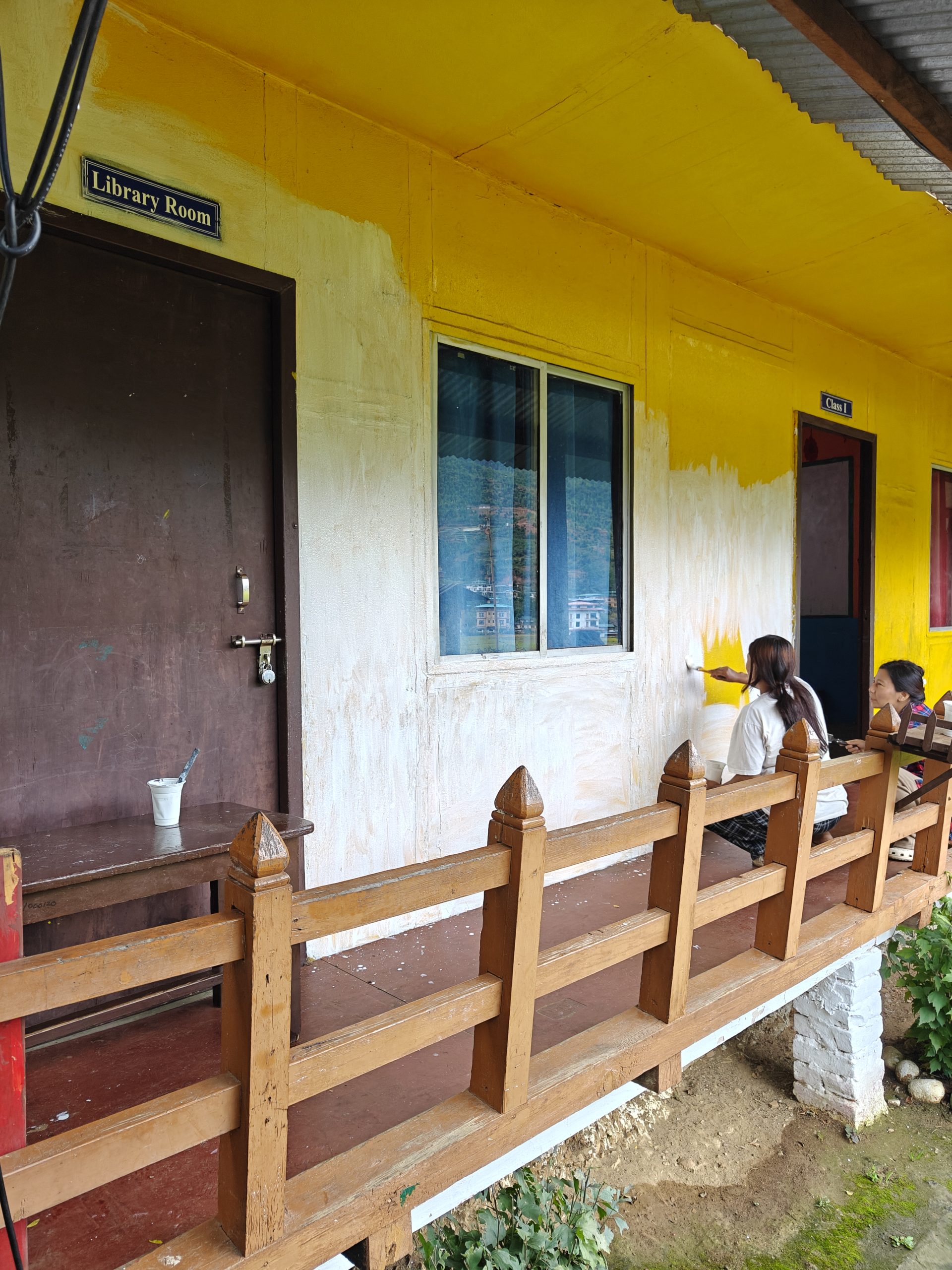
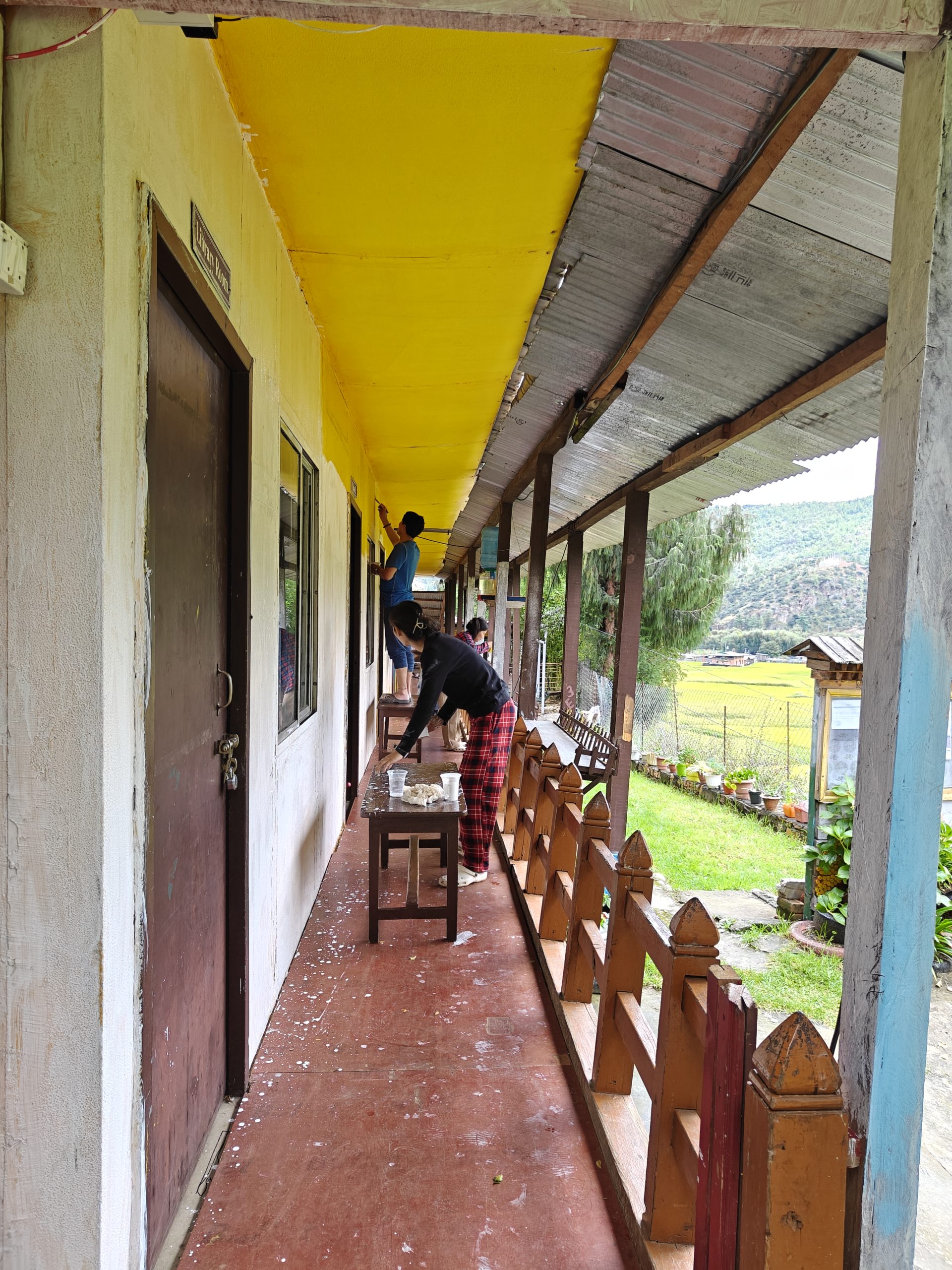
So our team arrived a week ahead. We walked around the school, looked at what was realistically possible, and spent time simply understanding what it took to keep this school going. Teaching is only part of it. The rest is a thousand small efforts to help children explore and grow.
We wanted our project to honour that effort. The idea we settled on: transform the school’s exterior walls with art and colour, combining creativity with service, and asking students to consider how the spaces we learn in shape the way we feel about the learning itself.
There was just one thing we hadn’t planned for.
The rain.
A Handful of Paints and a Promise
The downpour was relentless. We looked at the sky, then at our paint tins, and wondered: how do you paint outdoor walls in this weather? Could we complete the necessary wall repairs and prepare a clean wall before the students arrived? We had carried the colours, nurtured the ideas and made a promise. The weather may have been testing us, but the spirit of creation remained untouched. We held on to hope, knowing that when the skies cleared, those walls would become more than just surfaces. They would become canvases for young minds to fill with colour, imagination and possibility.
When we reached the school that Saturday, the teachers were already waiting for us.
Their excitement was infectious. Students from a metropolitan Indian school were travelling all the way to Bhutan to help brighten their school! Their enthusiasm reminded us why we were there.
And it raised a question we kept returning to: how do you measure the value of service? By the number of walls painted? Hours logged? How do you measure the synergy of strangers coming together to give their time and ideas to a shared purpose?
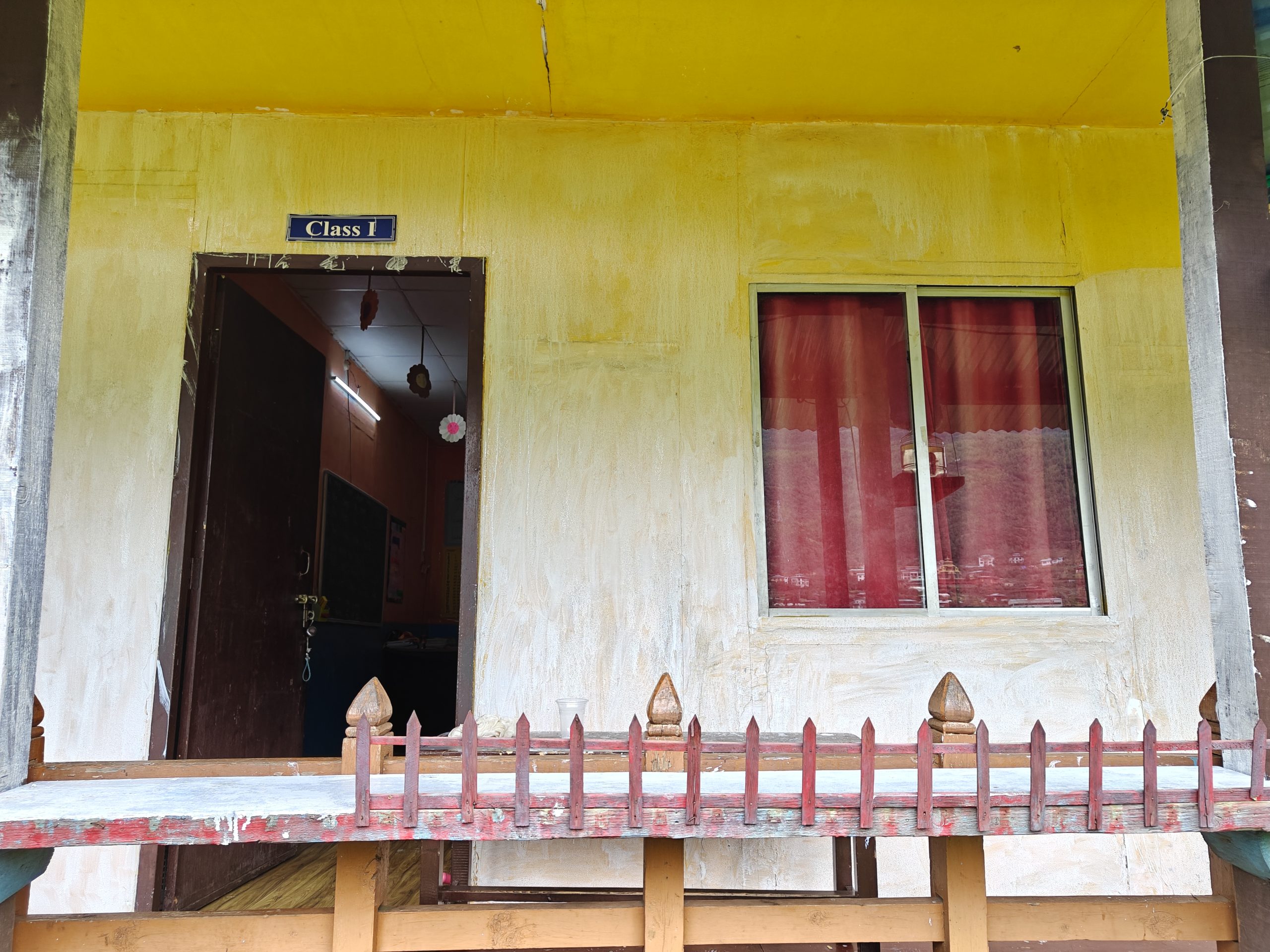
As if our prayers had finally been answered, the rain stopped two days before our CAS students were due to arrive.The weather was once again perfect for painting. It was time to begin.
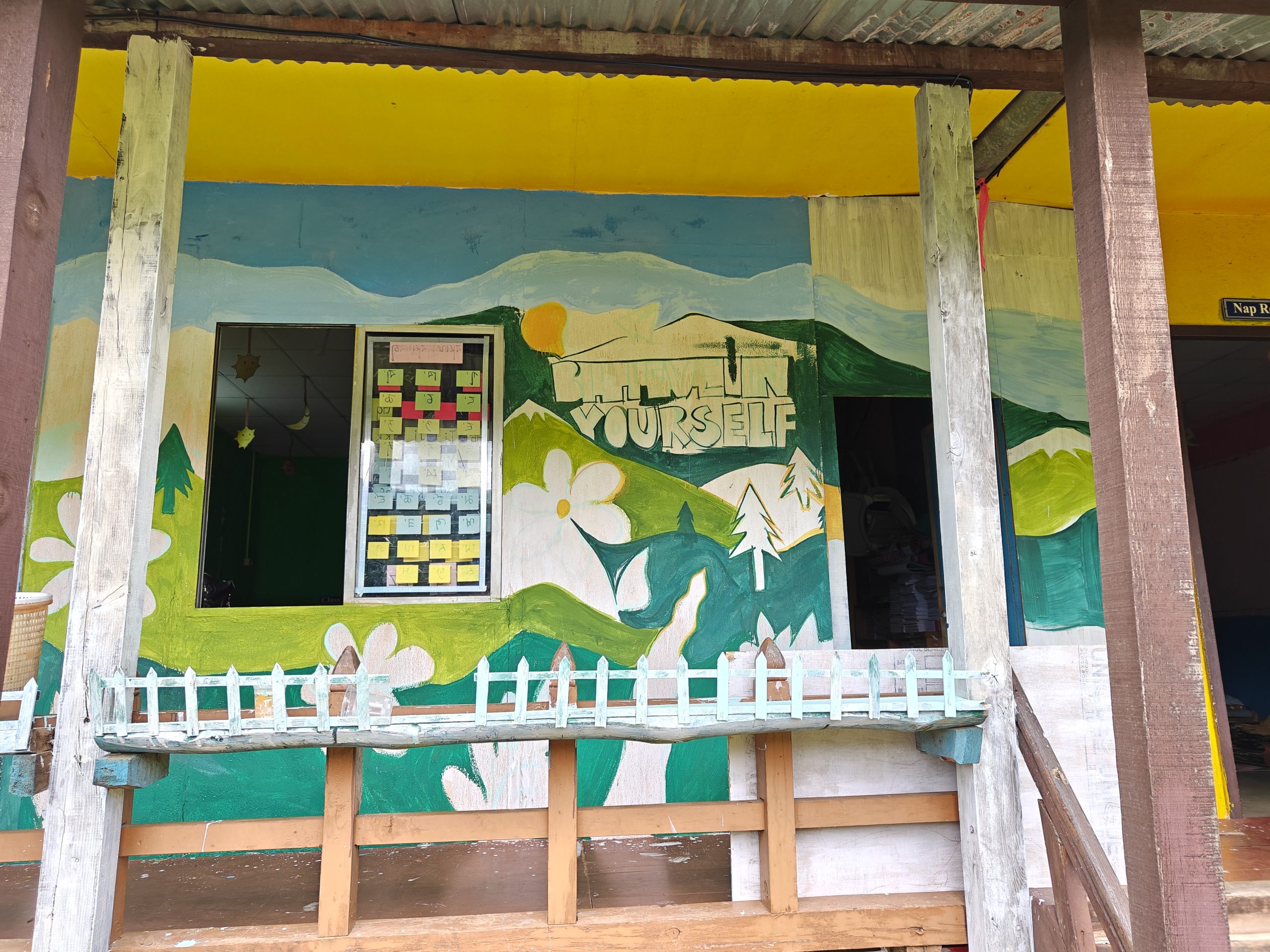
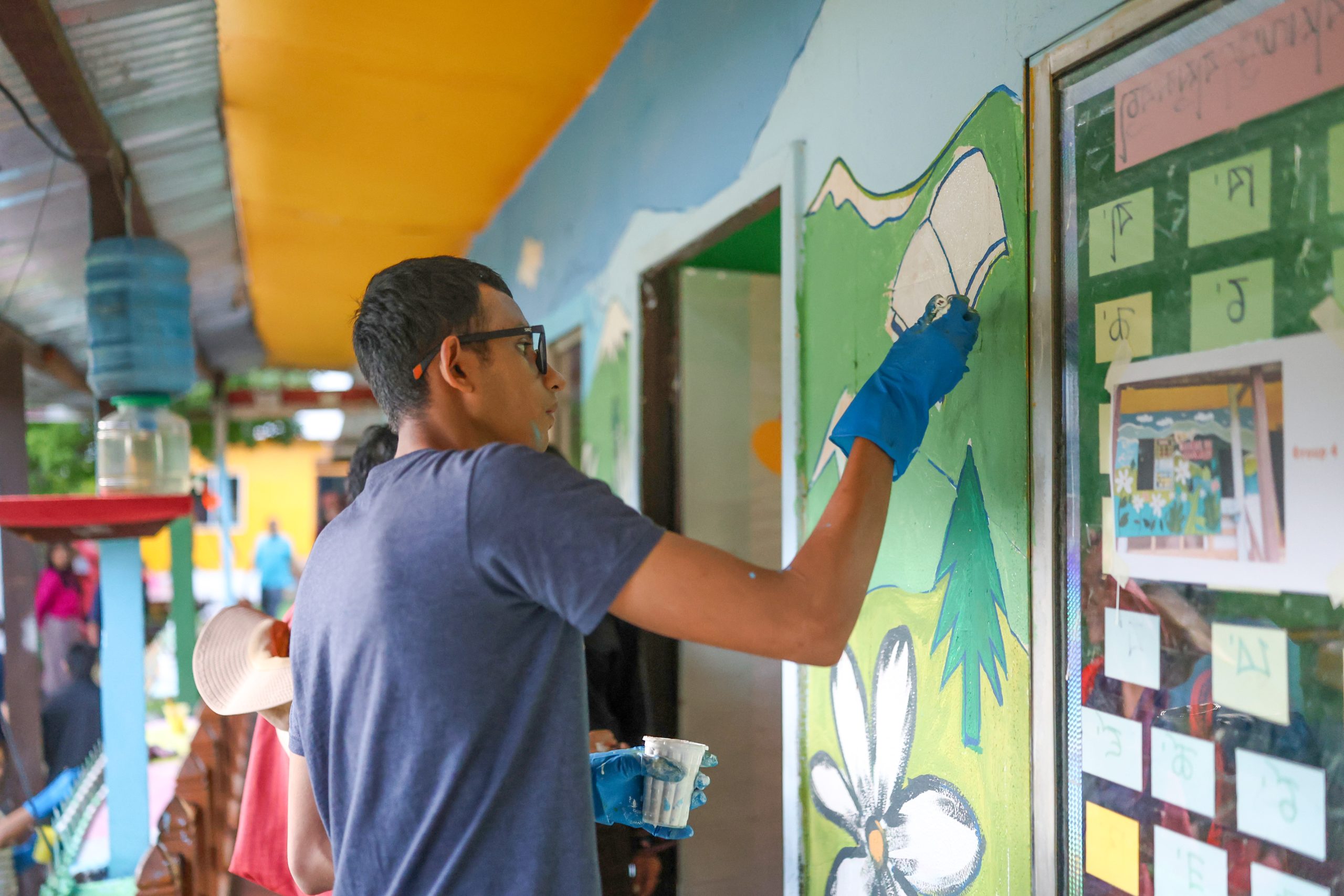
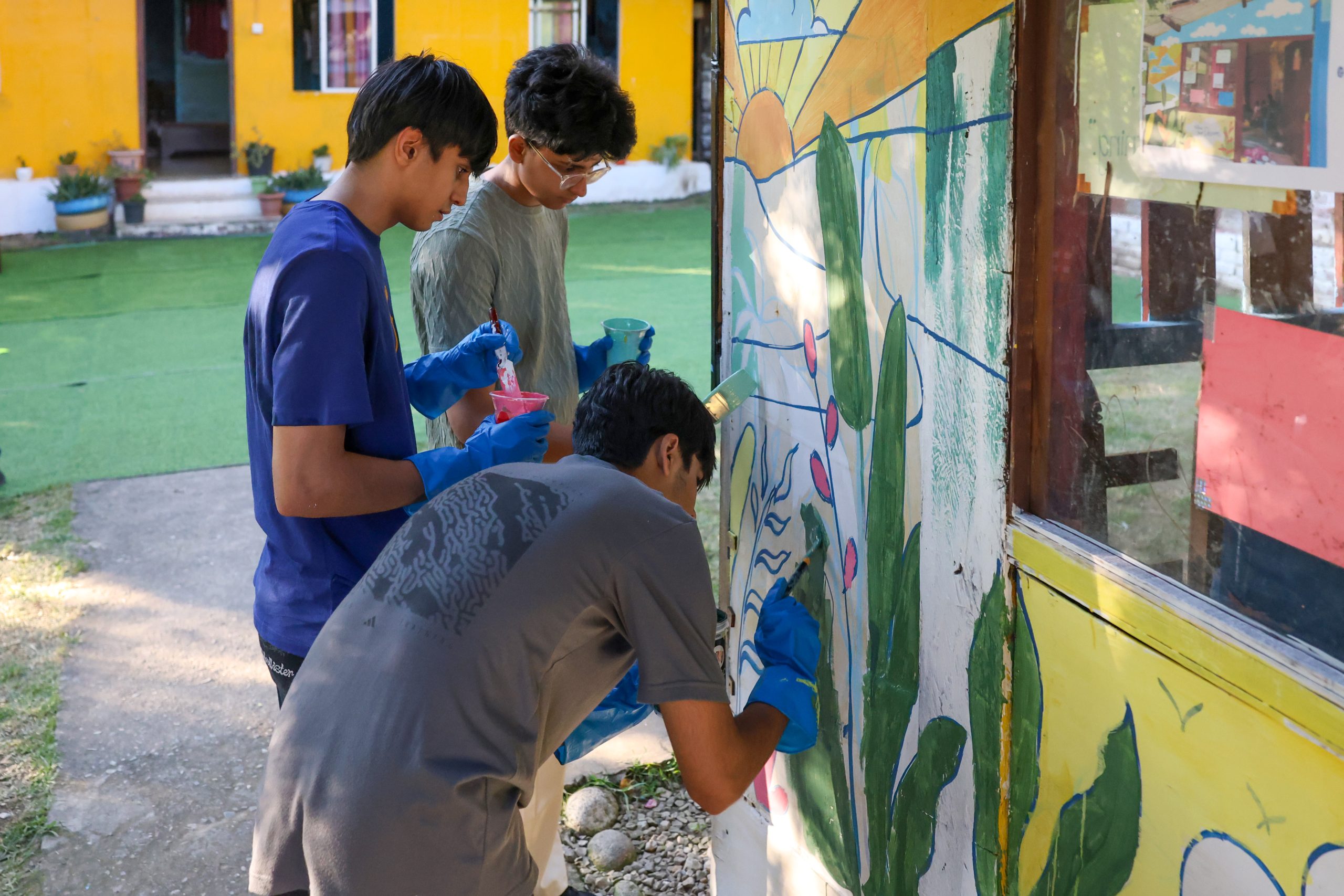
We picked our walls and talked about what each one would become. We didn’t want mere decoration. We wanted walls that would spark curiosity. We set aside one section for space and the universe, another for nature and greenery, others for playful, colourful ideas: walls that invite children to dream, question and imagine.
With a handful of paint cans and a great deal of determination, we began applying the base coat to the walls; laying the foundation for the transformation that was about to unfold.
The Teacher Who Taught Us About Empathy
Sunday gave us the moment we still talk about.
One of the teachers spent the entire day painting alongside us, wearing her baby on her back. She balanced motherhood, teaching and our project without fuss, simply because she cared about her school.
We stopped for a moment and just watched.
No lecture on empathy. No presentation on community participation. No classroom exercise on the value of service. Just a teacher who chose to give her time.
We had come believing we’d be the ones giving. Instead, we were standing next to someone who already lived the values we hoped our students would learn.
Sometimes the most powerful lessons come from people who never set out to teach them. Service isn’t always a grand gesture. More often, it’s the quiet, consistent care of people who show up, again and again, for the work and for each other.
As we painted on, one thought stayed with us: would our students see it too? Would they understand that the murals were never only about colour, but about creating something together and respecting the people who make a community what it is?
We hoped they would find the answer themselves.
The Students Arrive
The big day was upon us.
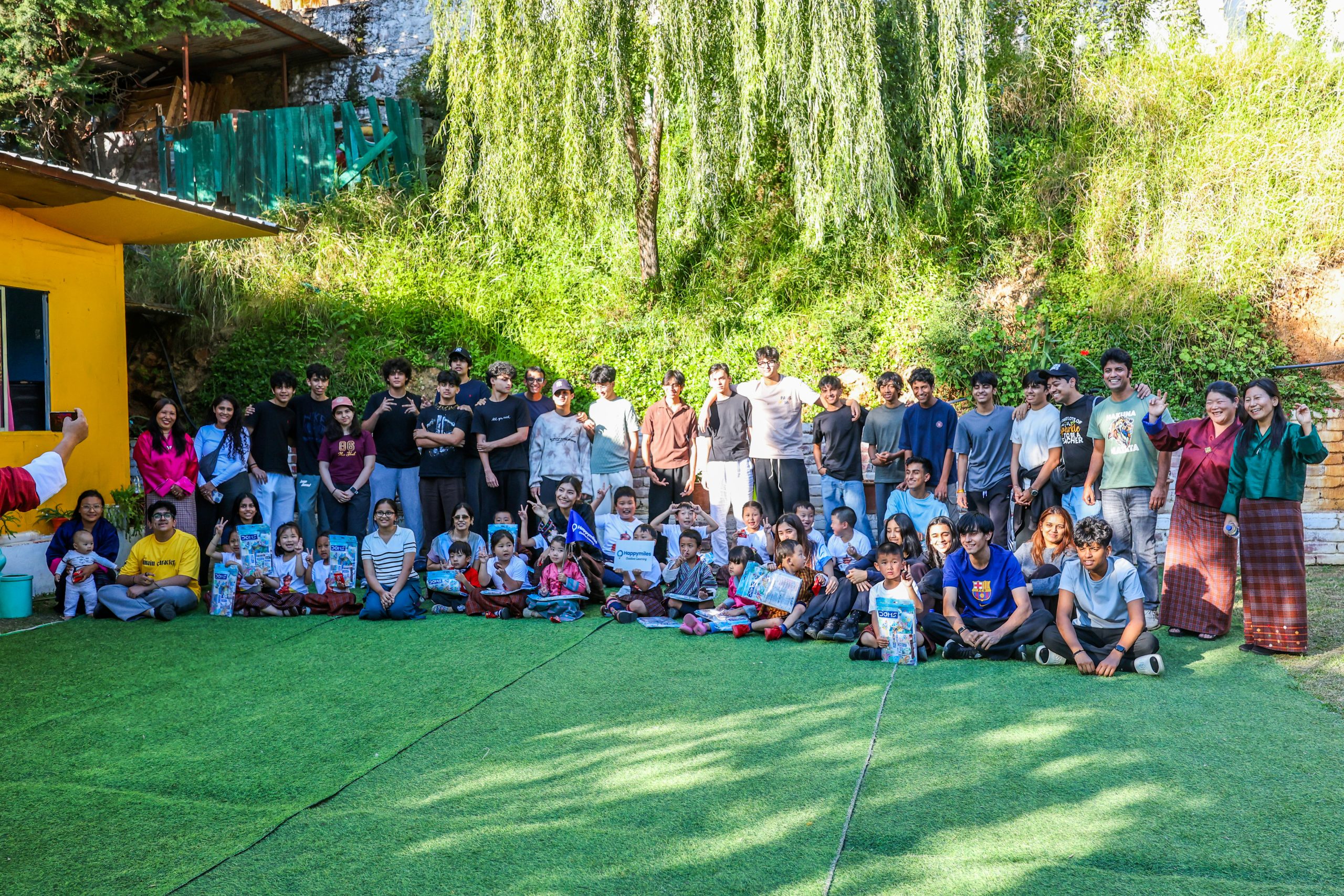
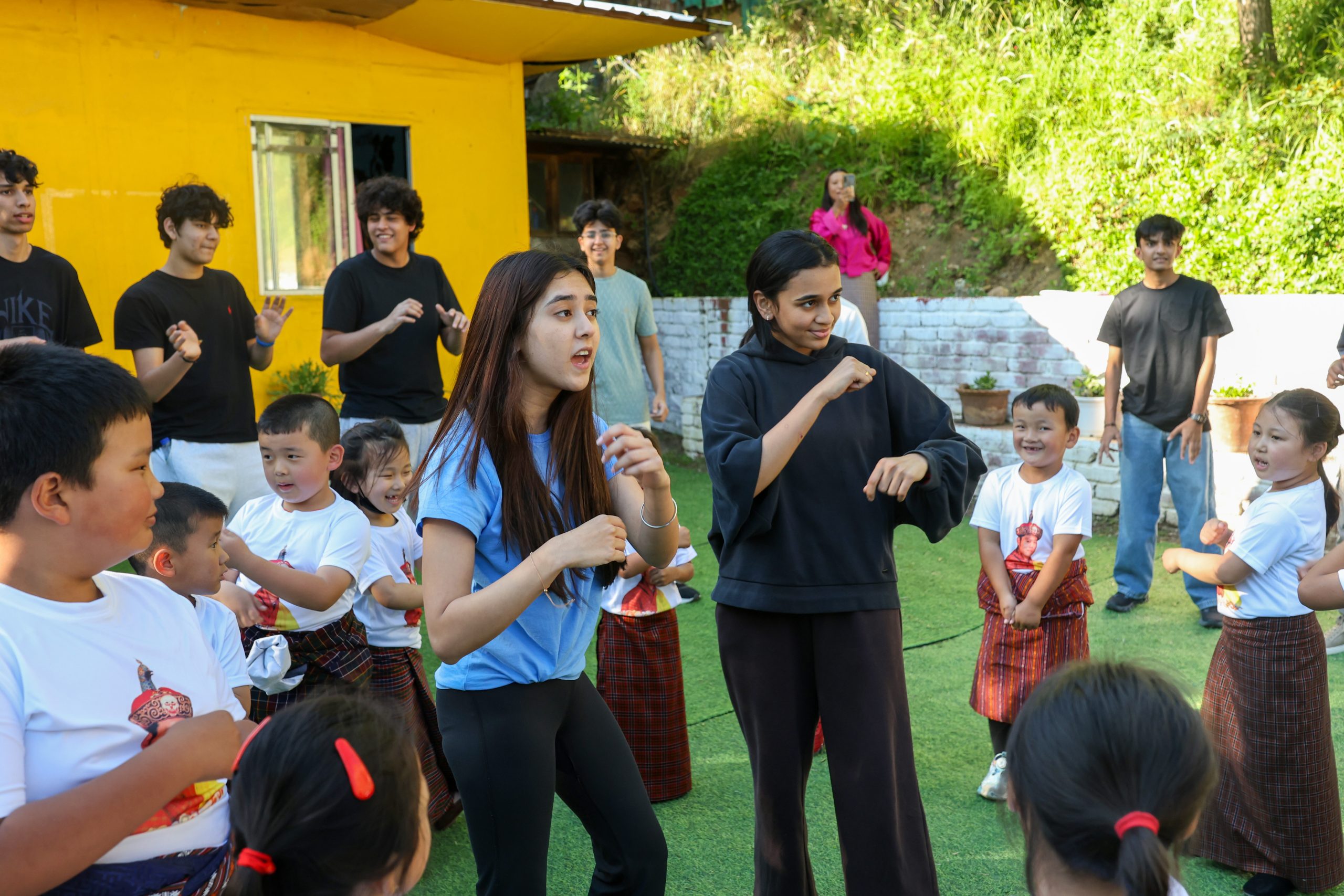
The local schoolchildren were buzzing. Our students arrived with their own mix of nerves and excitement. For our students, it was a chance to step out of textbooks and itineraries and meet a community face to face.
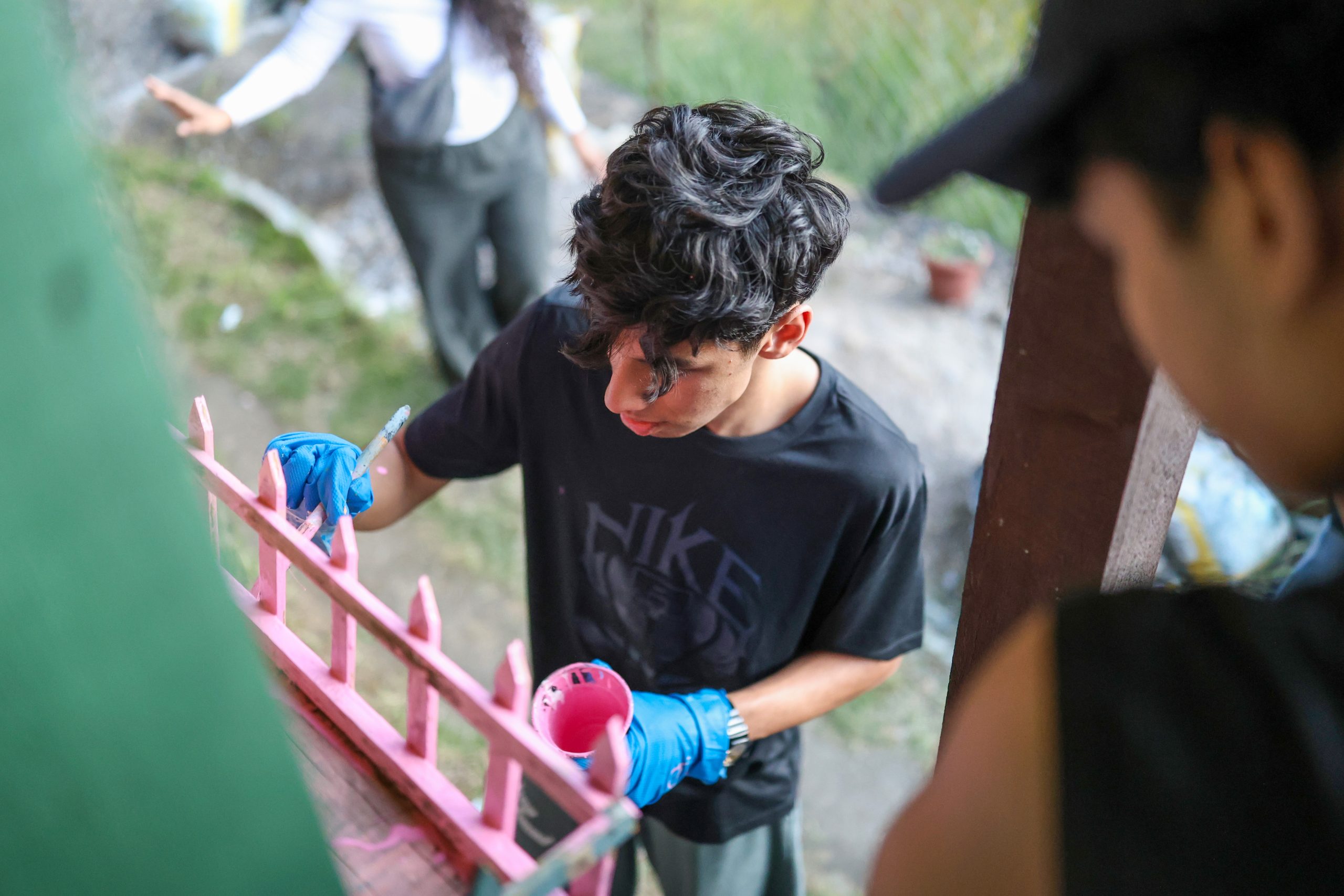
Handmade cards were exchanged, shy smiles turned into real ones, and the first conversations began. And then something unexpected happened: those conversations began to shape the art.
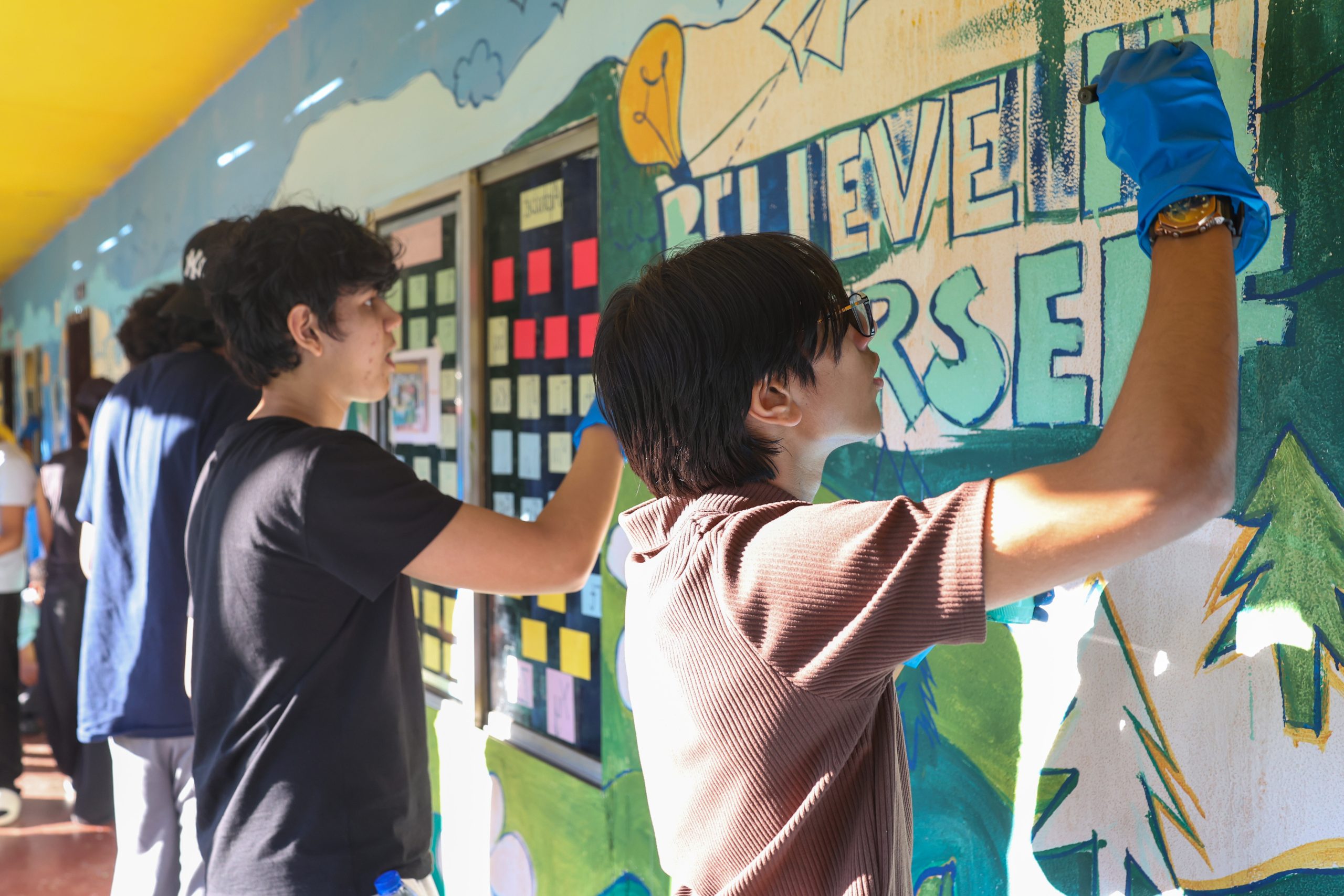
The children talked about their dreams, and two themes kept surfacing: space and nature. Our students listened and built those ideas into the design. They painted sections on space, greenery and the natural world, and added encouraging messages like “Believe in Yourself” and “Let Your Light Shine.”
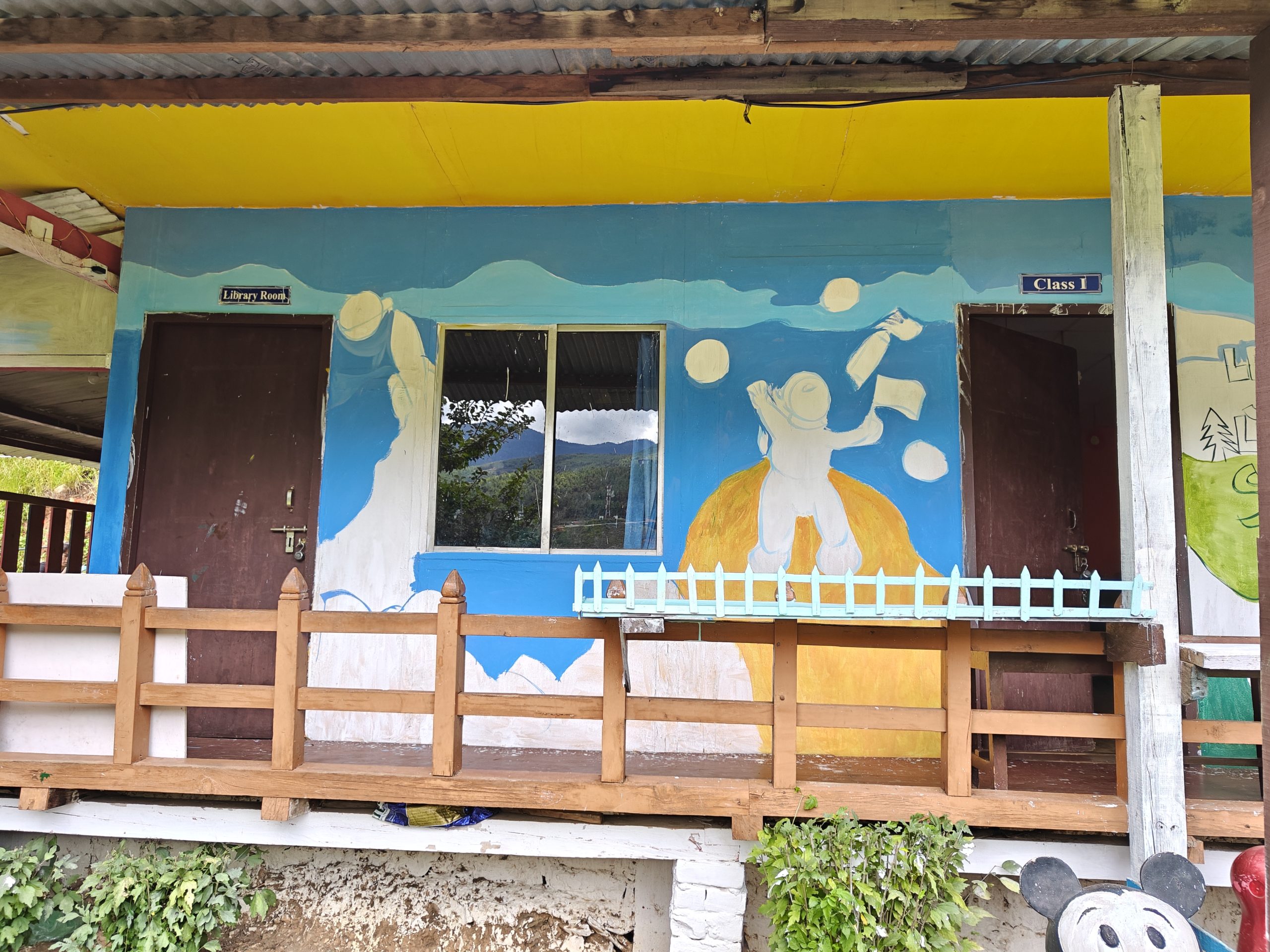
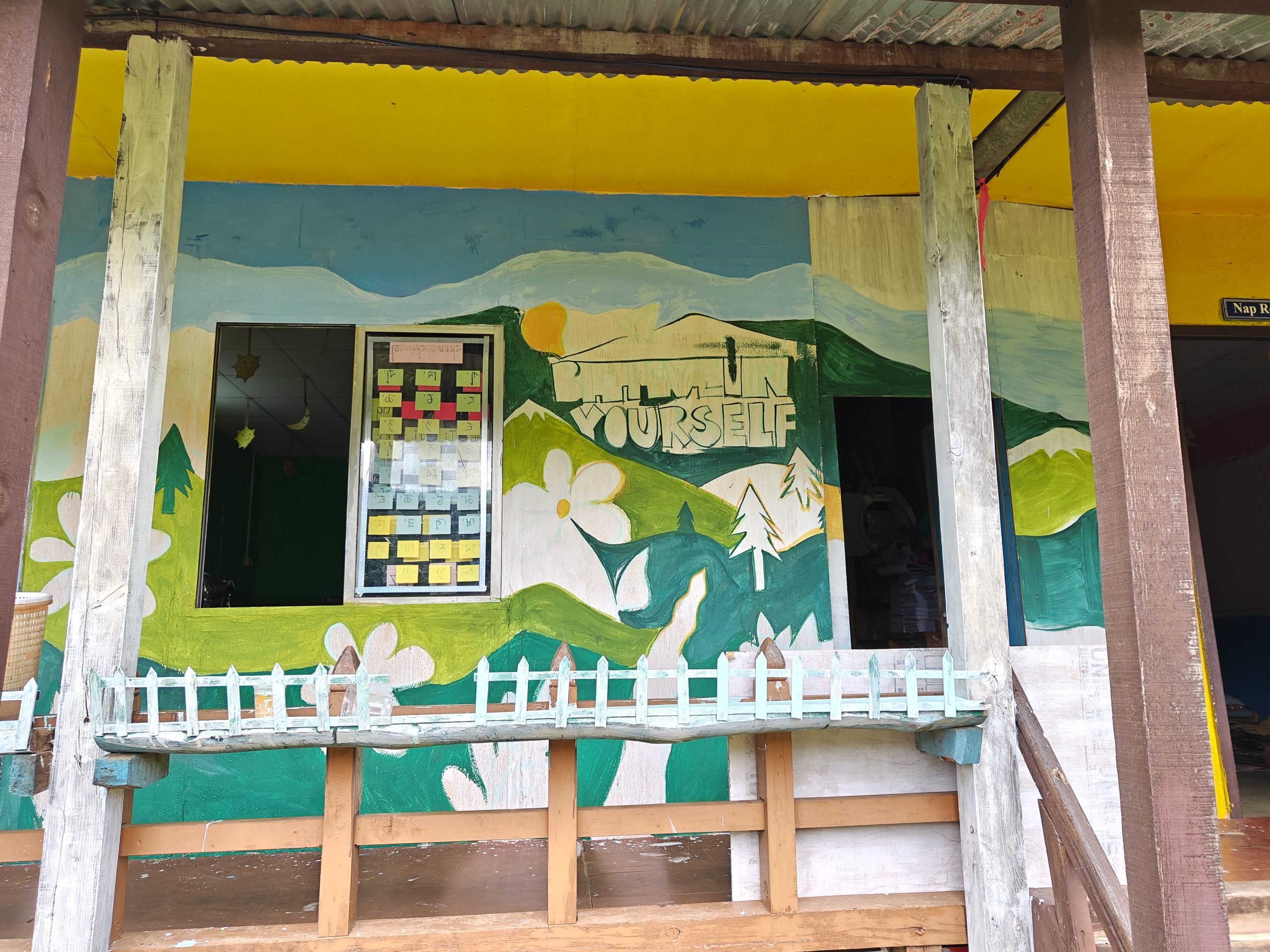
The mural was no longer our plan, delivered to the school. It was growing out of conversation, observation and shared imagination. The children weren’t just recipients of a service activity, their ideas became part of the outcome.
And our students learned, in the best way possible, that meaningful community engagement begins with listening.
What CAS Is Really About
The IB’s Creativity, Activity, Service framework pushes students beyond academics. But its real value isn’t in completing a checklist. It’s in connecting learning to real world requirements, grappling with different perspectives and reflecting on one’s own responsibilities.
Our Bhutan project brought all three strands together:
- Creativity showed up in the mural design, the choice of themes and the use of art to make blank walls come alive.
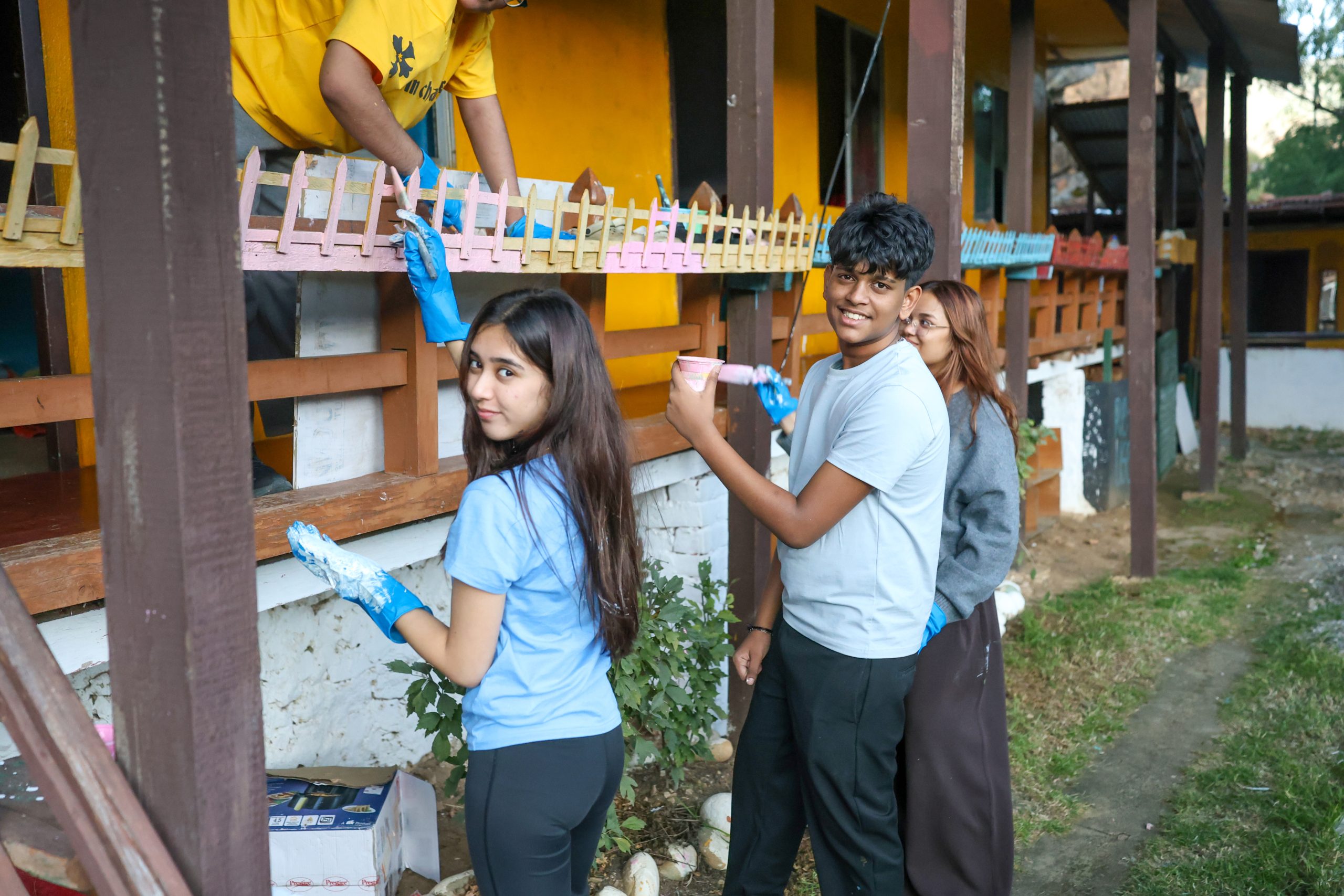
- Activity was in the physical work of preparing walls, painting, coordinating and adapting when the weather had other plans
- Service came from collaborating with the school community and working towards something shared.
And running through it all was reflection. What does it mean to help? How do we know our contribution is actually welcome? Who decides what a community needs? How do we support without making assumptions?
These aren’t comfortable questions, but they’re the ones that matter. The aim isn’t to arrive at answers. It’s to develop humility, curiosity and a willingness to learn. When students understand that, service stops being an activity and becomes a way of seeing.
Bhutan and the Meaning of Well-being
GNH looks at well-being through many lenses: psychological health, physical health, education, cultural diversity, community vitality, environmental conservation and good governance. It quietly challenges the idea that economic growth alone tells us whether a society is thriving.
GDP can tell us how much money an economy produces, but can it capture a teacher spending her Sunday painting a school wall? The thrill of children opening handmade cards? The confidence a student builds when they realise they have contributed to something real?
None of this shows up in an economic ledger. All of it is part of what makes a community healthy.
GEP adds one more layer by quantifying the value of nature. Together, these ideas invite us to see development through a wider lens, with people, communities and the natural world counted alongside money to measure growth.
For our students, the philosophy came alive in the everyday. A school amidst the farmlands was a lesson in our relationship with nature. A teacher’s dedication embodied community vitality. A shared mural became proof that well-being grows through belonging, creativity and common purpose.
GNH was no longer something to read about. It was something they had lived.
Travel for a Cause: Working With, Not Just For
Travel can introduce us to new landscapes, architecture and traditions. Travel with a purpose asks us for more: to look past what we see and try to understand the people behind it, to question our assumptions, and to recognise how our actions affect others.
Above all, it reminds us that a community should never be defined only by what it lacks.
Every community has its own knowledge, culture, resilience and ambition. The teachers in Paro didn’t need us to show them what dedication looks like. They showed us. What we could offer was collaboration: our time, our creativity, and our willingness to work together.
That’s the kind of service we hope students carry forward. Service rooted in dignity, not pity. In partnership, not superiority. In understanding, not assumption.
A good project shouldn’t cast one group as the hero and the other as the beneficiary. It should be a meeting, where people exchange ideas, learn from each other and build something together. That’s when service becomes a two-way street.
The Journey Continues
When we look back at Paro, the painted walls are a lovely part of the story. They hold the effort and imagination of everyone who picked up a brush.
But the real outcome isn’t on the walls. It’s in the questions our students took home. Will they think differently about community engagement? Will they travel more thoughtfully? Will they remember that empathy begins with listening, and that real support starts with respect?
We won’t know in a day. Empathy grows slowly, through encounters, reflection and a willingness to keep learning. A CAS experience can plant the seed, but students have to carry it forward.
We arrived in Bhutan with paints, ideas and a plan to transform a school. We also arrived with questions about service, happiness and what progress really means.
We left with something richer: the dedication of teachers, the imagination of children, the power of working together, and a deeper sense of how people and nature are bound up with one another.
Perhaps that’s what makes travel for a cause so meaningful. It isn’t only about changing a place. It’s about letting that place change the way you see the world.
Because the true measure of a service journey isn’t only what we leave behind, but what we carry forward.
Happymiles Outdoor Learning
Frequently Asked Questions
What is the role of community service in the IB CAS programme?
Community service is an important component of the International Baccalaureate (IB) Creativity, Activity, Service (CAS) programme. It encourages students to engage with communities, understand local challenges and contribute meaningfully through collaborative initiatives. The focus is on developing empathy, social responsibility, intercultural understanding and reflective learning.
How can international travel support meaningful CAS experiences?
International travel allows students to step outside familiar environments and engage with different cultures, communities and real-world contexts. Through carefully curated experiences, students can develop intercultural awareness, adaptability, communication and problem-solving skills while connecting classroom learning with practical experiences.
What did students learn from the Bhutan school mural project?
The school mural project in Paro provided students with an opportunity to collaborate with the local school community through art. They explored creative expression, teamwork, communication and shared decision-making while understanding the importance of respecting local contexts. The experience demonstrated that community service is as much about listening and learning as it is about contributing.
How do students identify the needs of a local community before starting a service project?
Meaningful community engagement begins with understanding rather than assumptions. Students interact with local stakeholders, observe their surroundings and identify opportunities in consultation with the community. This ensures that projects are relevant, respectful and developed collaboratively rather than imposed from outside.
What skills can students develop through community-based learning?
Community-based learning helps students develop collaboration, leadership, communication, creativity, critical thinking and problem-solving skills. It also encourages empathy, cultural sensitivity, adaptability and an understanding of social responsibility through direct engagement with people and places.
How does Happymiles curate community engagement programmes for schools?
Happymiles designs experiential learning programmes that connect academic objectives with real-world engagement. Each programme is developed around the school’s learning requirements, student age group and curriculum framework. Experiences may include art and craft collaborations, school revitalisation, environmental initiatives, cultural exchanges and interactions with local communities.
How can schools organise a CAS-focused educational trip with Happymiles?
Schools can collaborate with Happymiles to design customised educational journeys aligned with their IB CAS objectives and broader learning outcomes. From identifying suitable destinations and community partners to coordinating workshops, activities and on-ground logistics, Happymiles facilitates the programme from planning to execution.
